
Kent Valley Logistics Hub
The Kent Valley sits at the center of Puget Sound freight. Here's why importers and shippers stage their cargo here — and how proximity to the ports changes your supply chain math.
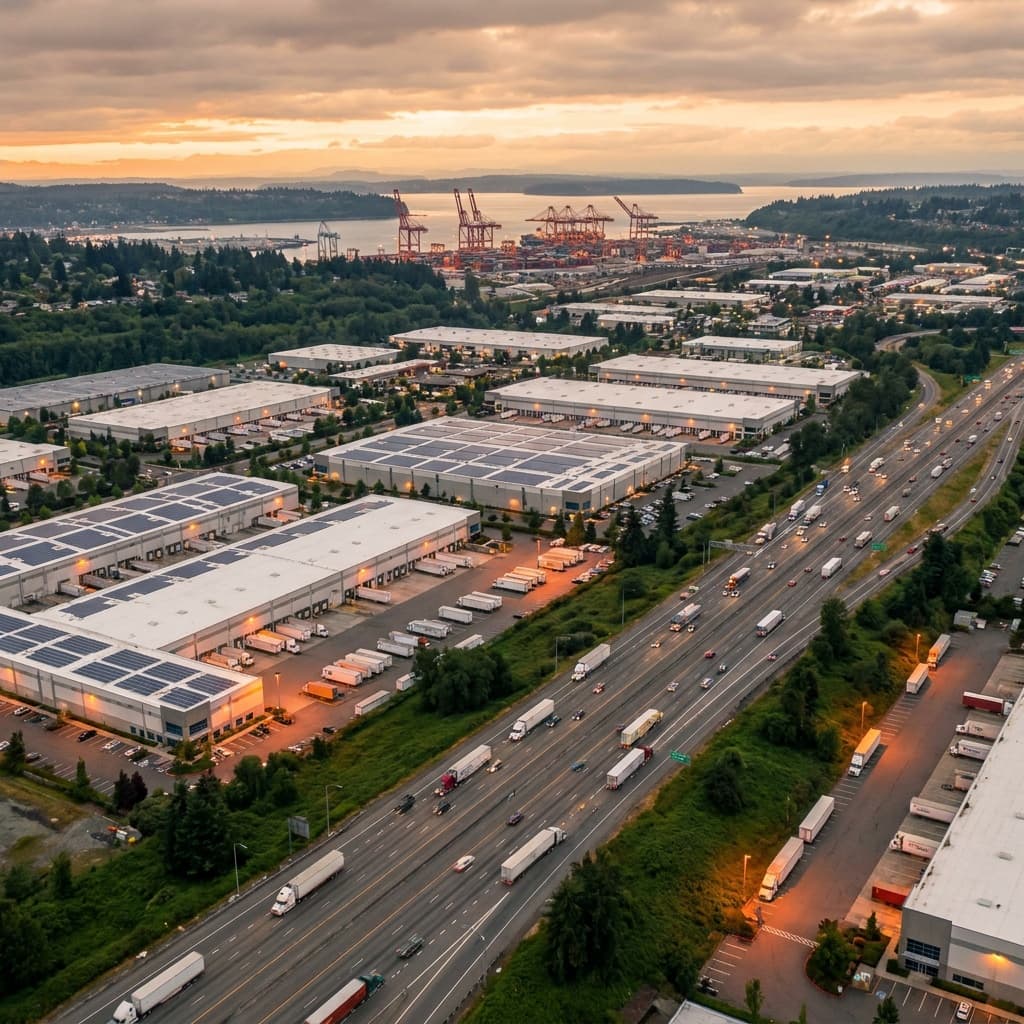
If you move freight through the Pacific Northwest, odds are it passes through the Kent Valley. The stretch of industrial land running from Kent through Auburn and Sumner has quietly become one of the densest distribution corridors on the West Coast — and for importers, that concentration is a strategic advantage.
Geography is the whole story
The Kent Valley sits in the sweet spot between the Port of Seattle and the Port of Tacoma, with direct access to both the I-5 and SR-167 freight corridors. A container coming off a vessel can be on a chassis and at a Kent warehouse in a fraction of the time — and mileage — it would take from a more distant facility.
That matters because drayage is billed by the trip and by the hour. Every mile between the terminal and your warehouse is a mile you pay for, and every hour stuck in congestion is a driver's clock running. Staging your freight close to the docks compresses both.
Why importers stage cargo here
- Faster container turns — quicker drayage means containers get returned faster and per-diem charges shrink.
- Transloading flexibility — ocean containers can be unloaded and reloaded into domestic trailers for the long haul east, freeing the marine box immediately.
- Overflow capacity — when your primary DC fills up, Kent Valley warehouses absorb the surge without re-routing freight across the region.
The single-partner advantage
The biggest inefficiency in port logistics is handoffs. Every time a container moves between a drayage company, a CFS, and a warehouse, you add a point of failure and a line on the invoice.
The fix is consolidation. When one partner owns the trucks and the building, your freight stays under one roof of accountability from the terminal gate to the moment it ships back out. That's the model we've built around here in Kent — and it's why "we can satisfy all your warehousing needs" isn't just a slogan.
If your supply chain touches Seattle or Tacoma, the question isn't whether to stage in the Kent Valley. It's who you trust to run it. See our warehousing and distribution services or contact us to talk through your drayage and storage needs. Carriers evaluating a trucking warehouse in this corridor should check dock capacity, transloading capability, and drayage distance before committing. If you're evaluating a distribution center in the Sumner–Kent corridor, our Sumner distribution center guide covers what to look for.
Frequently asked questions
How close is the Kent Valley to the Ports of Seattle and Tacoma?+
The Kent Valley sits almost exactly between the two — a short drayage run to either the Port of Seattle or the Port of Tacoma via the I-5 and SR-167 corridors. That central position is why so much Puget Sound warehousing concentrates here.
What is drayage and why does location matter?+
Drayage is the short-haul movement of an ocean container from the port to a nearby warehouse or rail yard. Because it's billed by trip and time, a warehouse close to the terminals means fewer miles, less congestion exposure, and lower drayage cost per container.
Can a single provider handle both port drayage and warehousing?+
Yes. When one partner owns the drayage fleet and the warehouse — as All Season Warehouse does with a 55-truck fleet and a 200,000 sq ft facility — your container never changes hands, which reduces handoffs, delays, and finger-pointing.