
Container Freight Station (CFS) Services Explained for Kent Valley Importers
What a Container Freight Station does, who needs CFS services, how LCL cargo gets deconsolidated, and what to look for in a licensed CFS facility in the Kent Valley.
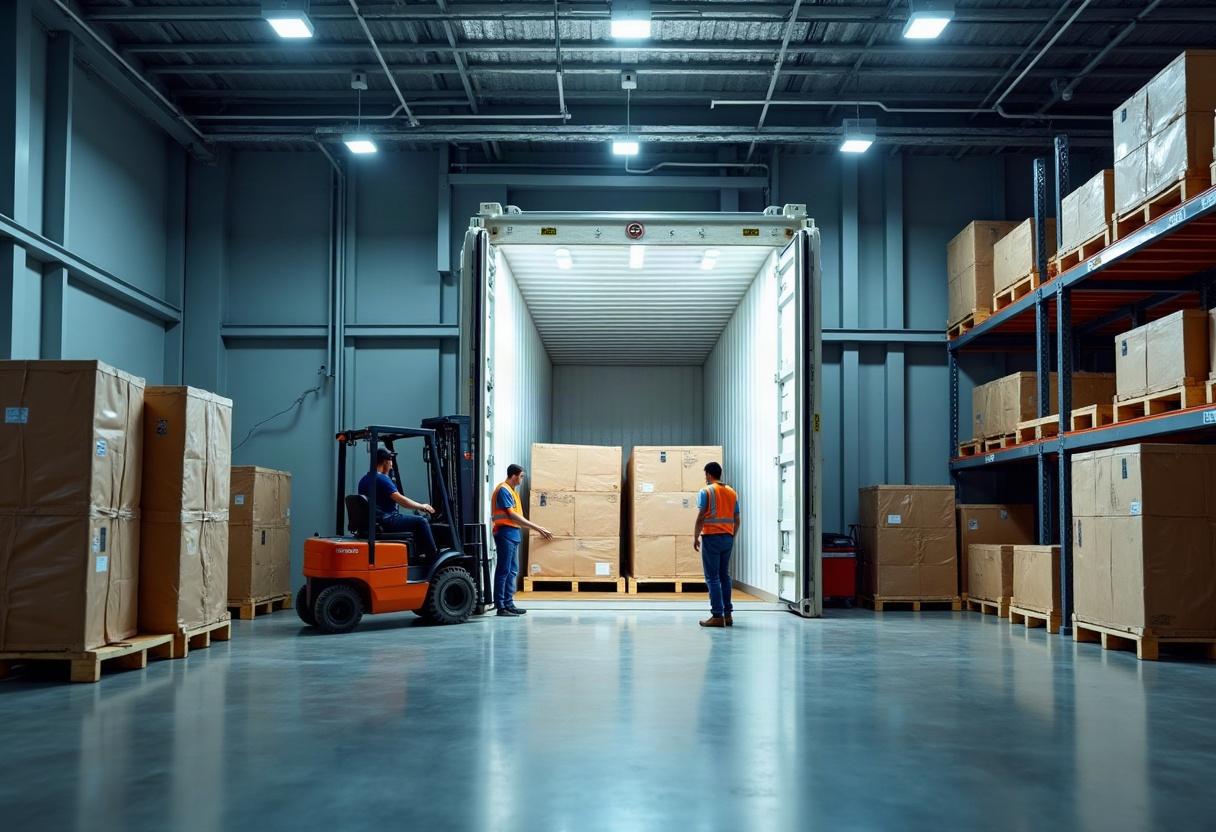
If you import goods but cannot fill an entire ocean container, your cargo is moving as LCL — less than container load. That means your freight shares a container with several other consignees, and somewhere between the marine terminal and your dock, that container has to be opened, sorted, and split apart. The facility licensed to do that work is a Container Freight Station, and if you import through the Ports of Seattle or Tacoma, understanding how a CFS works will save you time, fees, and confusion.
This guide explains what a Container Freight Station does, who needs one, how the deconsolidation process actually works, and what to look for when choosing a CFS in the Kent Valley.
What a Container Freight Station Is
A Container Freight Station is a warehouse facility licensed to receive shared ocean containers and break them down. The license matters: a CFS operates under customs-bonded status, meaning freight can be received, sorted, and released under customs supervision before final entry is complete.
The two core functions of a CFS are:
- Deconsolidation (inbound). An LCL container arrives from the port carrying freight belonging to multiple consignees. The CFS unloads the container, separates each consignment, verifies piece counts against the shipping documents, and notifies each consignee that their freight is ready for pickup or delivery.
- Consolidation (outbound). The reverse: multiple shippers' cargo is brought to the station, packed into one container, and shipped as a single container load to save ocean freight costs.
A modern CFS does more than sort boxes — it is the point where port logistics hand off to warehousing and distribution.
Who Needs CFS Services?
CFS services apply to you if:
- You import LCL cargo. Your ocean freight forwarder books your shipment into a shared container, and the bill of lading shows CFS terms rather than CY (container yard) terms.
- You do not have a dock. Many small importers cannot receive a full container — no dock, no forklift, no room for 20 pallets. A CFS turns containerized freight into palletized freight you can actually take delivery of.
- You need flexible release timing. Freight at a CFS can be picked up in portions as you sell through inventory, rather than all at once.
- You export LCL cargo. Consolidation at the CFS turns several small shipments into one container at a fraction of the cost of individual bookings.
If your freight fills a full container and you have your own dock, your cargo likely moves on CY terms and never touches a CFS. If it does not, the CFS is a mandatory link in your chain.
How the CFS Process Works, Step by Step
For an LCL import into Puget Sound, the process looks like this:
- Container discharge at the marine terminal. The vessel berths at the Port of Seattle or Port of Tacoma and the shared container is discharged to the terminal yard.
- Drayage to the CFS. A trucking carrier pulls the container from the terminal and delivers it to the Container Freight Station. In the Kent Valley, that drayage leg is short — the CFS corridor sits minutes from both ports.
- Unloading and sorting. The CFS devans the container, counts and inspects freight against each house bill of lading, and separates consignments by consignee. Any shortage or damage is documented at this step — which is why the tally at the CFS is your evidence for cargo claims.
- Customs release. Each consignee's freight is released as its own customs entry clears. This is the advantage of the bonded CFS: your cargo does not wait behind someone else's paperwork.
- Notification and delivery. The CFS notifies you (or your broker) that freight is available. You pick it up, or the CFS arranges local delivery — many consignees combine CFS release with transloading and cross-dock services to move freight onto domestic trailers for final delivery.
From container arrival to cargo availability, standard deconsolidation runs one to three business days for a typical LCL container.
What a Full-Service CFS Offers Beyond Deconsolidation
A bare-bones station unloads and sorts. A full-service Container Freight Station in the Kent Valley can wrap the entire post-port supply chain around your cargo:
- Bonded storage. Hold freight at the station while customs entries, duties, or downstream delivery schedules resolve.
- Transloading. Move freight from the ocean container directly onto 53-foot domestic trailers — no double handling, and the marine container goes back to the steamship line before per-diem charges accumulate.
- Warehousing and distribution. Pallet racking, inventory tracking, and order fulfillment from the same facility where your freight was deconsolidated. Our warehousing and distribution service handles everything from overflow storage to full-scale fulfillment.
- Drayage coordination. A CFS that works with its own drayage partner — like the affiliated trucking fleet that serves our Kent facility — eliminates a vendor handoff on the most time-sensitive leg of the move.
What to Look For in a Kent Valley CFS
The Kent Valley holds one of the densest concentrations of CFS and warehouse space in Washington, positioned between the two Puget Sound ports along the I-5 and SR 167 corridors. When comparing facilities, evaluate:
- Licensing and bonding. Ask directly whether the facility is a licensed CFS operating under customs bond — the terms are not interchangeable with a general warehouse.
- Facility scale and security. Container volume swings seasonally. A small facility fills up and your freight waits outside. Our 200,000-square-foot facility on 76th Avenue South in Kent has the dock capacity and floor space to absorb peak-season deconsolidation without a storage backlog.
- Turnaround time. The metric that matters is days from container arrival to freight availability. A station that averages one to two days keeps your downstream schedule intact.
- Documentation discipline. The CFS tally is your proof of condition for cargo claims. Clean receiving reports, piece-count verification, and damage photos are the difference between a paid claim and a denied one.
- Integrated logistics. Deconsolidation is almost never the end of your supply chain. A station that also offers transloading, storage, and outbound distribution turns three vendors into one.
Common CFS Fees to Expect
CFS pricing is built from handling charges rather than pure storage:
- Deconsolidation/handling fee — per cubic meter or per pallet for unloading and sorting the shared container
- CFS storage — free time (commonly a few days) then a daily per-CBM or per-pallet rate
- Documentation — for tally reports, transfer to a customs bonded warehouse, or R & D (receiving and delivery) coordination
- Delivery / transfer fee — moving released freight to your location or to the next warehouse
Compared to the alternative — paying for full-container freight you cannot fill, or taking delivery of a container your facility cannot unload — CFS handling fees are the economical path for small and mid-sized importers.
The Bottom Line
A Container Freight Station is where shared-container freight becomes deliverable freight: the licensed, bonded facility that unloads LCL containers, sorts cargo by consignee, and hands each shipment back to its owner. For Puget Sound importers, the Kent Valley is the deconsolidation hub — minutes from both ports, attached to the region's densest warehousing corridor.
If you import LCL cargo through Seattle or Tacoma, contact All Season Warehouse about CFS deconsolidation, bonded storage, and transloading from our licensed Kent facility.
Frequently asked questions
What is a Container Freight Station?+
A Container Freight Station (CFS) is a licensed warehouse facility where less-than-container-load (LCL) cargo is deconsolidated and consolidated. Shared ocean containers arriving at the Port of Seattle or Tacoma are trucked to the CFS, unloaded, sorted by consignee, and held for pickup or onward delivery. A CFS also consolidates multiple shippers' cargo into outbound containers.
Who needs Container Freight Station services?+
Importers whose cargo is too small to fill a full 20-foot or 40-foot container. Instead of paying for a whole container, their freight shares container space with other consignees' goods — and a licensed CFS is where that shared container gets unpacked and each shipment is separated out.
What is the difference between CFS and CY cargo handling?+
CY (container yard) terms mean the shipper or consignee handles the container intact at the terminal yard — the container moves as one unit. CFS terms mean the cargo inside the container is shared among multiple consignees, so it must be taken to a Container Freight Station for unloading, sorting, and distribution.
How long does CFS deconsolidation take?+
Once the container arrives at the station, deconsolidation of a standard LCL container typically takes one to three business days depending on the number of consignees and documentation status. Cargo is usually released the same day it is sorted, once customs clearance and duties are confirmed.
Where is the Container Freight Station for Seattle and Tacoma imports?+
Most LCL cargo entering Puget Sound is deconsolidated at CFS facilities in the Kent Valley, positioned between the Port of Seattle and Port of Tacoma. All Season Warehouse operates a 200,000-square-foot licensed facility in Kent that provides CFS deconsolidation alongside transloading and warehousing.