
Commercial Storage Services: What PNW Businesses Need to Know About Warehouse Storage
Commercial storage services in the Kent Valley explained — rack storage, floor storage, climate control, costs per pallet, and how PNW businesses use 3PL warehousing to scale.
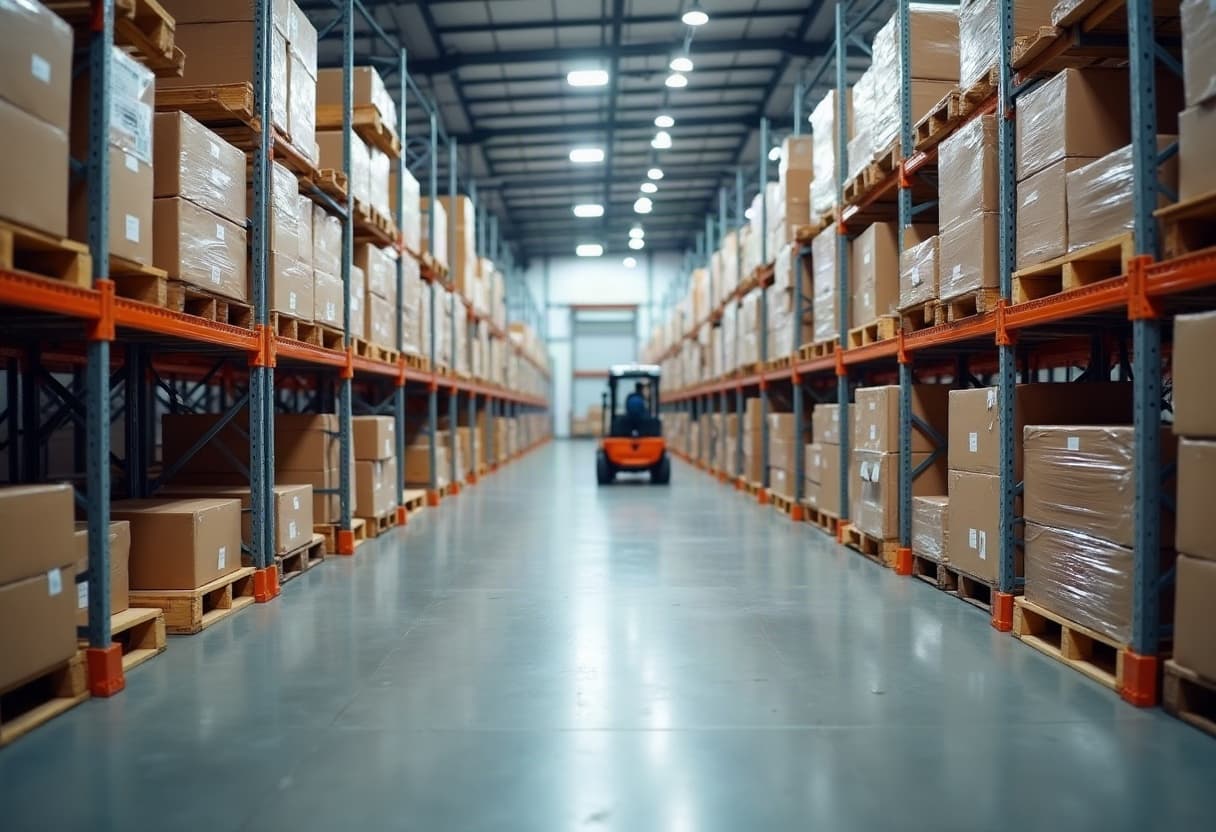
When a container of imported goods arrives at the Port of Tacoma, the freight inside needs somewhere to go. A manufacturer in Auburn producing components needs space to hold raw materials before assembly. A retailer in Seattle with a seasonal spike in inventory needs overflow storage for three months. None of these businesses want to sign a five-year lease on a 20,000-square-foot warehouse — they need flexible, pallet-level storage that scales with their needs.
That is what commercial storage services provide. A 3PL warehouse receives your freight, stores it on pallets, tracks it in an inventory system, and ships it out when you need it. You pay for the space you use, not for a building you have to maintain.
What Commercial Storage Services Include
Commercial storage is more than just space. A full-service 3PL warehouse in the Kent Valley provides four core functions.
1. Receiving and Inbound Handling
Your freight arrives at the warehouse — typically by truck from the Port of Seattle, Port of Tacoma, a rail terminal, or a supplier. The warehouse:
- Checks the bill of lading against what was ordered
- Counts pallets and inspects for damage
- Unloads the truck using forklifts or pallet jacks
- Logs the receipt into their warehouse management system (WMS)
- Notifies you that your freight has arrived
The warehouse logs the receipt into their warehouse management system and notifies you that your freight has arrived. If you need freight received from a shipping container, the warehouse can handle that as part of the receiving process. For a breakdown of how pallet storage works end to end, see our pallet storage guide.
2. Storage
Once received, your freight is assigned a storage location. There are two primary storage types:
Floor-stacked storage. Pallets are placed directly on the warehouse floor, stacked 2 to 3 high depending on product stability and ceiling clearance. Floor stacking is cheaper per pallet position — typically $12 to $20 per pallet per month — but slower to access individual pallets. It works best for high-volume, low-SKU freight where you ship out entire stacks at once.
Racked storage. Pallets are placed in steel racking systems with individual positions, each tagged with an SKU and lot number. Racked storage costs more — $18 to $35 per pallet per month — but allows fast access to any pallet. It is necessary when you have many SKUs, need frequent picking, or require FIFO (first-in-first-out) rotation.
Some freight requires climate-controlled storage — food products, pharmaceuticals, electronics, or goods sensitive to humidity. Climate-controlled space costs more and is limited in availability. If your freight has temperature requirements, confirm the warehouse has certified climate-controlled space before committing.
3. Inventory Tracking
A 3PL warehouse does not just store your freight — it tracks it. The warehouse management system records:
- What was received and when
- Where each pallet is located (aisle, bay, level)
- SKU and lot numbers for traceability
- Inventory levels and available positions
- Outbound shipments and remaining stock
You should receive regular inventory reports — typically monthly or on-demand — showing what you have in storage, how long it has been there, and what has shipped out. If a warehouse cannot provide this level of tracking, that is a red flag.
4. Retrieval and Outbound Shipping
When you need freight shipped out, the warehouse pulls the specific pallets from storage, loads them onto an outbound truck, and updates the inventory system. This is where racked storage pays off — a forklift driver can pull a specific pallet from a rack in minutes. Retrieving a specific pallet from the middle of a floor stack takes longer and may require moving other pallets out of the way.
Outbound services typically include:
- Order picking (pulling specific pallets or cases)
- Loading onto your truck or a carrier's truck
- Generating shipping documents and bills of lading
- Cross-docking if you need freight transferred directly from inbound to outbound without storage
For businesses that need freight moved between trucks or from container to truck without storage, learn how cross-docking near Kent works.
How PNW Businesses Use Commercial Storage
The Kent Valley is one of the busiest logistics corridors in the Pacific Northwest. Businesses use commercial storage in several ways:
Importers. A container arrives at the Port of Tacoma. The importer does not have their own warehouse. The 3PL receives the container, unloads it, stores the pallets, and ships them out to retailers or distributors over the following weeks.
Seasonal retailers. A business that sells outdoor gear stocks up in spring and fall. They need 3 months of overflow storage during peak season, then clear out by off-season. Commercial storage gives them space without a year-round lease.
Manufacturers. A manufacturer in Auburn produces components but does not have room to store raw materials. They use commercial storage to hold inbound materials near the production line, pulling pallets as needed.
Distributors. A distributor receives freight from multiple suppliers, stores it in one location, and consolidates outbound shipments to customers. Commercial storage with a 3PL handles the receiving, storage, and consolidation.
What Commercial Storage Costs in the Kent Valley
| Service | Typical Cost | |--------|-------------| | Floor-stacked pallet storage | $12–$20 per pallet per month | | Racked pallet storage | $18–$35 per pallet per month | | Inbound receiving (per pallet) | $15–$30 per pallet | | Outbound loading (per pallet) | $15–$30 per pallet | | Climate-controlled storage | 20–40% premium over standard rates |
Volume discounts apply for commitments of 50 pallets or more. Most warehouses offer better per-pallet rates for long-term contracts (6+ months) or high-volume accounts.
Choosing a Commercial Storage Provider
When evaluating a 3PL warehouse in the Kent Valley, ask:
- What is your warehouse management system? You need real-time inventory visibility, not a spreadsheet.
- Do you have food-grade or climate-controlled space? If your freight requires it, confirm certification.
- What are your receiving hours? Port arrivals do not always happen on a 9-to-5 schedule.
- How do you handle damage and loss? Get the claims process in writing before you store freight.
- What is your outbound turnaround time? If you need freight shipped same-day, confirm the warehouse can do it.
All Season Warehouse operates from the Kent Valley, serving shippers moving freight through the Port of Seattle, Port of Tacoma, and the broader Pacific Northwest. We provide floor-stacked and racked commercial storage, cross-docking, climate-controlled storage, and full inventory tracking. Contact us for a per-pallet rate quote based on your freight type, volume, and storage duration.
Need commercial storage in the Kent Valley? See our warehouse services or contact All Season Warehouse for a per-pallet rate quote. For storage fundamentals, read our pallet storage guide.
Frequently asked questions
What is commercial storage?+
Commercial storage is a warehousing service where a 3PL warehouse stores palletized freight, inventory, or equipment for businesses on a short-term or long-term basis. You pay a monthly rate per pallet position or per square foot, and the warehouse handles receiving, putaway, inventory tracking, and retrieval. Commercial storage is used by manufacturers, retailers, importers, and distributors who need space without leasing an entire warehouse.
How much does commercial storage cost in the Kent Valley?+
Commercial storage in the Kent Valley costs $12 to $35 per pallet per month depending on storage type. Floor-stacked storage runs $12 to $20 per pallet. Racked storage runs $18 to $35 per pallet. Climate-controlled storage is higher. Most warehouses also charge inbound receiving ($15 to $30 per pallet) and outbound loading fees. Volume discounts apply for commitments of 50 pallets or more.
What is the difference between commercial storage and self-storage?+
Self-storage gives you a unit you access yourself, typically for boxes and small items. Commercial storage is a 3PL service where warehouse staff receive your freight by truck, store it on pallets in a warehouse, track it in an inventory system, and retrieve it for outbound shipping when you need it. Commercial storage is for businesses moving palletized freight, not individuals storing household items.
How long can I store freight in commercial storage?+
Most 3PL warehouses in the Kent Valley offer both short-term storage (under 90 days) and long-term storage (90 days or more). Short-term storage is common for shippers using the warehouse as a buffer between port arrival and final delivery. Long-term storage suits businesses with seasonal inventory or ongoing stock replenishment. There is no maximum period, but rates may adjust for extended commitments.