
Pallet Storage Services: How Kent Valley Warehouses Handle Palletized Freight
Pallet storage services in the Kent Valley explained — how 3PL warehouses receive, rack, and retrieve palletized freight, with real costs, storage types, and turnaround times for PNW shippers.
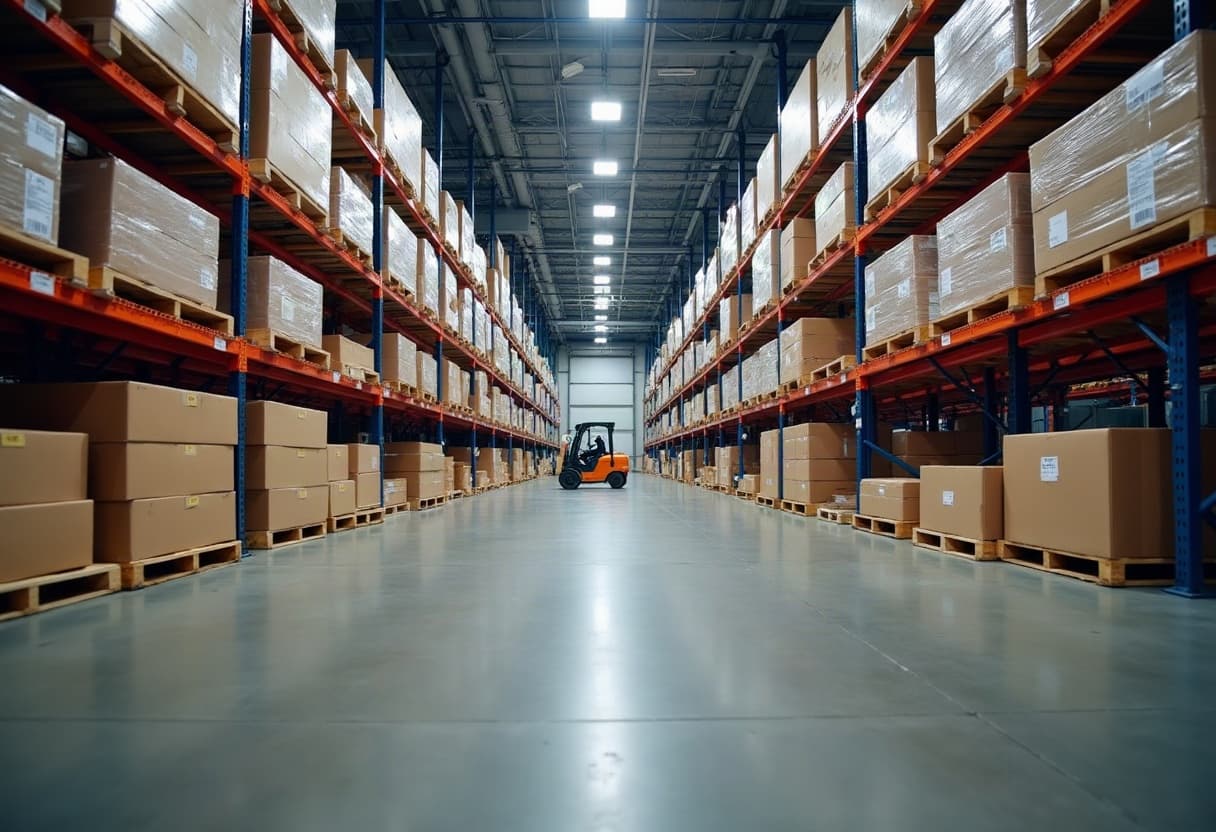
Palletized freight is the backbone of Pacific Northwest logistics. When a container arrives at the Port of Tacoma or the Port of Seattle, the goods inside are almost always on pallets — standard 48-by-40-inch wooden platforms that make it possible to move freight with a forklift instead of by hand. But once that container is unloaded, those pallets need somewhere to go. That is where pallet storage comes in.
For shippers in the Kent Valley, pallet storage is the link between port arrival and final delivery. It is the service that lets you receive a container on Monday, hold the freight for a week while you line up distribution, and ship it out on your schedule — not the port's.
How Pallet Storage Works
The pallet storage process at a 3PL warehouse follows four stages:
-
Receiving. Your freight arrives at the warehouse — typically by truck from the port or a rail terminal. The warehouse checks the bill of lading, counts the pallets, inspects for damage, and logs the receipt into their inventory system. If a container needs unloading, the warehouse handles that too — learn more in our Kent Valley warehouse storage guide.
-
Putaway. The warehouse assigns each pallet a storage location. Floor-stacked pallets go directly onto the warehouse floor, stacked 2 to 3 high depending on product stability and ceiling clearance. Racked pallets go into steel racking systems with individual positions, each tagged with an SKU and lot number for tracking.
-
Storage. Pallets sit in their assigned locations until you request them. During storage, the warehouse tracks inventory levels, monitors for damage or spoilage, and maintains environmental conditions if your freight requires climate control.
-
Retrieval and outbound. When you need freight shipped out, the warehouse pulls the specific pallets from storage, loads them onto an outbound truck, and updates the inventory system to reflect the outbound movement. This is where racked storage pays off — a forklift driver can pull a specific pallet from a rack in minutes, whereas digging it out of a floor stack takes longer.
Types of Pallet Storage
Not all pallet storage is the same. The right method depends on your freight profile — how many SKUs you have, how often you need access, and how long the freight stays.
Floor-stacked storage is the simplest and cheapest method. Pallets are placed directly on the floor and stacked on top of each other. It works best for high-volume, low-SKU freight where you ship out entire pallets at a time and do not need to pick individual cases. The downside is access — if the pallet you need is at the bottom of a stack of three, the forklift has to move the top two first.
Racked storage uses steel racking systems to create individual pallet positions, typically 3 to 5 levels high. Each pallet has its own slot, accessible by forklift without moving other pallets. Racked storage costs more per position but is essential when you have many SKUs, need FIFO (first-in-first-out) rotation, or require frequent picking. For a deeper look at warehouse storage options, see our guide to warehousing and storage services in Kent, WA.
Drive-in racking is a hybrid — forklifts drive into the rack structure to load and retrieve pallets, maximizing density. It is used for high-volume, low-variety storage where LIFO (last-in-first-out) is acceptable.
Push-back racking uses gravity-fed rails that slide pallets forward as the forklift removes the front one. It offers better selectivity than drive-in racking while maintaining high density.
Pallet Storage Costs in the Kent Valley
Pallet storage pricing in the Kent Valley is competitive because the region has a high concentration of 3PL warehouses serving the ports of Seattle and Tacoma. Here is what to expect:
| Storage Type | Cost per Pallet per Month | Best For | |---|---|---| | Floor-stacked | $12 - $25 | High-volume, low-SKU freight | | Racked | $18 - $35 | Multi-SKU, frequent picking | | Climate-controlled | $25 - $50 | Food-grade, pharma, electronics | | Food-grade certified | $20 - $40 | FDA-compliant food and beverage |
Inbound receiving and outbound loading are billed separately, typically $15 to $30 per pallet. Some warehouses offer bundled pricing if you commit to a monthly volume — 50 pallets or more usually unlocks a discount.
The Kent Valley rate advantage comes from location. A warehouse in Kent is roughly 15 miles from the Port of Seattle and 12 miles from the Port of Tacoma, with direct access to I-5 and SR 167. Shorter drayage distances mean lower inbound freight costs, which compounds the storage savings. For shippers moving high volumes, the difference between a Kent warehouse and one 40 miles from the ports can be $2 to $4 per pallet in drayage alone.
What to Look for in a Pallet Storage Provider
Not every warehouse that stores pallets does it well. When evaluating a pallet storage partner in the Pacific Northwest, ask:
-
Inventory tracking system. Can they tell you where every pallet is, right now, without calling someone? A warehouse without a warehouse management system (WMS) is a warehouse where pallets get lost.
-
Forklift capacity and equipment. Do they have the right forklifts for your pallet weights? Standard pallets max out around 2,500 pounds, but industrial freight can exceed 4,000. A warehouse with only 3,000-pound forklifts cannot safely handle heavier loads.
-
Receiving and loading dock availability. How many docks do they have, and what are the typical wait times? A warehouse with 4 docks and 20 inbound trucks per day is a bottleneck.
-
Security. Is the facility fenced, gated, and monitored? Palletized freight is valuable, and shrinkage is a real cost.
-
Food-grade certification (if applicable). If you are storing food or beverage products, the warehouse needs FDA-compliant storage with documented pest control, temperature monitoring, and separation from non-food freight. Our food-grade warehousing guide covers this in detail.
-
Turnaround time. How fast can they pull a pallet and load it on an outbound truck? For just-in-time distribution, 24-hour turnaround should be the minimum.
Common Pallet Storage Challenges
Pallet damage during putaway. A rushed forklift driver can crack a pallet stringer, making the pallet unsafe to stack. A good warehouse inspects every pallet at receiving and flags damaged ones before putaway.
Inventory drift. Without a WMS, pallet counts drift — the system says 120 pallets in stock, but there are 118 because two were pulled for an order that was never logged. Cycle counts and barcode scanning eliminate this.
Mixed-product contamination. Storing food-grade pallets next to chemical pallets without physical separation violates FDA guidelines and can ruin an entire shipment. A certified warehouse manages this with designated zones.
Access delays. Floor-stacked storage is cheap until you need a pallet that is buried under two others. If your distribution pattern requires frequent access to specific SKUs, racked storage is worth the premium.
The Kent Valley Advantage for Pallet Storage
The Kent Valley — running from Tukwila through Kent, Auburn, and Sumner — has one of the highest concentrations of warehouse space in the Pacific Northwest. This is not an accident. The valley sits between the two largest ports in Washington state, with I-5 running north-south and SR 167 connecting east-west freight corridors. Rail spurs from the BNSF and Union Pacific mainlines serve multiple warehouse facilities.
For a shipper, this means three things: shorter drayage from the ports, more warehouse options to choose from, and competitive pricing driven by local supply. If you are storing palletized freight anywhere in the PNW, the Kent Valley gives you the shortest distance between port arrival and warehouse putaway, which translates to lower inbound freight costs and faster turnaround.
The key is choosing a warehouse that understands palletized freight — not just one that has space. Pallet storage is a service, not a square-footage rental. The right partner tracks your inventory, handles your freight without damage, and gets it in and out on your schedule. If you are looking for warehouse services near your distribution point, start with our warehouse services overview to see what a full-service 3PL in the Kent Valley should offer.
Ready to store palletized freight in the Kent Valley? See our warehouse services or contact All Season Warehouse for a per-pallet storage quote. For the full breakdown of pallet storage costs and options, read our commercial storage services guide.
Frequently asked questions
What is pallet storage and how does it work?+
Pallet storage is a warehousing service where a 3PL warehouse receives your palletized freight, assigns it a storage location (floor stacked or racked), tracks it by SKU and lot number, and retrieves it when you need it shipped out. The warehouse handles receiving, putaway, inventory tracking, and outbound loading. You pay a monthly rate per pallet position based on the storage type and your volume.
How much does pallet storage cost in the Kent Valley?+
Pallet storage in the Kent Valley typically costs $12 to $25 per pallet per month for floor-stacked storage, and $18 to $35 per pallet per month for racked storage. Rates depend on pallet dimensions, weight, product type (food-grade costs more), and whether you need climate control. Volume discounts apply for commitments of 50 pallets or more. Inbound receiving and outbound loading are billed separately, usually $15 to $30 per pallet.
What is the difference between floor-stacked and racked pallet storage?+
Floor-stacked storage places pallets directly on the warehouse floor, stacked 2 to 3 high. It is cheaper but slower to access individual pallets and works best for high-volume, low-SKU freight. Racked storage uses steel racking systems with individual pallet positions, allowing fast access to any pallet. Racked storage costs more per position but is necessary when you have many SKUs, need frequent picking, or require FIFO rotation.
How long can I store pallets at a 3PL warehouse?+
Most 3PL warehouses in the Kent Valley offer both short-term (under 90 days) and long-term (90 days or more) pallet storage. Short-term storage is common for shippers using the warehouse as a cross-dock or buffer between port arrival and final delivery. Long-term storage suits businesses that need seasonal inventory holding or ongoing stock replenishment. There is no maximum storage period, but rates may adjust for extended commitments.
Does All Season Warehouse offer pallet storage for PNW shippers?+
Yes. All Season Warehouse operates from the Kent Valley, offering pallet storage for shippers moving freight through the Port of Seattle, Port of Tacoma, and the broader Pacific Northwest. We provide floor-stacked and racked storage, container handling, cross-docking, transloading, and inventory tracking. Contact us for a per-pallet rate quote based on your freight type and volume.