
Warehousing and Storage Services in Kent, WA
What to expect from warehousing and storage services in Kent, WA — storage types, racking vs floor, pallet handling, inventory tracking, and why the Kent Valley location cuts your drayage and transit cost.
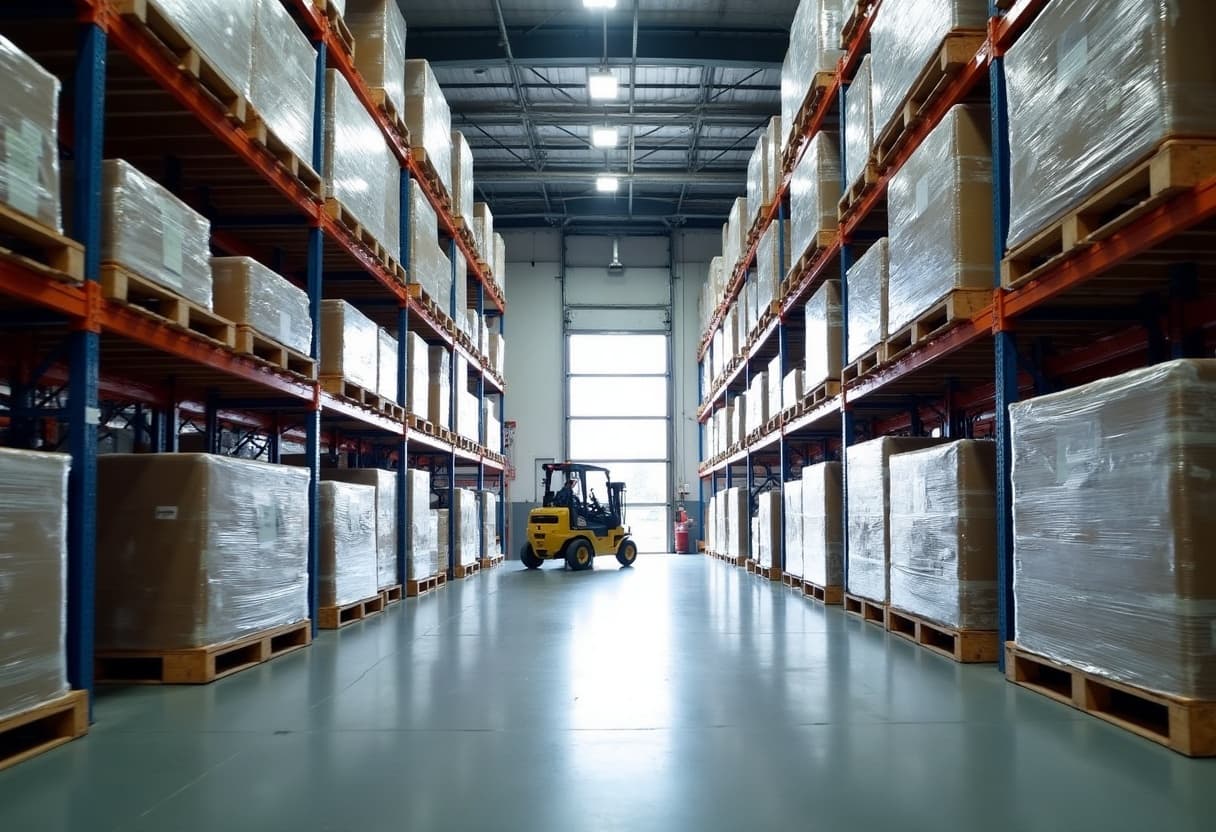
If you are searching for warehousing and storage in Kent, WA, you are probably trying to solve one of three problems. Containers are sitting at the Port of Seattle or Port of Tacoma and per-diem charges are adding up. You need to hold pallets somewhere between inbound and outbound, but you do not want to lease a whole warehouse. Or your product needs to be unloaded, sorted, and reloaded onto different equipment before it ships out.
A Kent Valley warehouse solves all three, but only if you know what to ask for. This is what shippers should expect from warehousing and storage services in Kent, WA, and how to tell a real operation from a building with a dock.
What warehousing and storage actually covers
The terms get used loosely, so it helps to be specific. A full-service Kent warehouse typically offers four connected services.
Pallet-in, pallet-out storage. Your freight arrives on pallets, gets scanned in, is put away in racking or on the floor, and is pulled and loaded when you call for it. This is the baseline. You pay for the space your freight occupies and the handling each time it moves.
Transloading. Goods are moved from one mode of transport to another, most often from an ocean container into domestic 53-foot trailers. This matters for importers because domestic trailers are cheaper to move inland and you can return the marine container fast.
Cross-docking. Inbound freight is unloaded and immediately reloaded onto outbound trucks with little or no storage in between. This is how you skip storage cost entirely when your freight just needs to be sorted and redistributed.
Container Freight Station services. CFS work covers deconsolidation of ocean containers, repalletizing, labeling, and consolidation for export. It is the part of warehousing that handles the messy reality of international freight.
A warehouse that only offers floor storage and nothing else is a holding pen. A warehouse that offers all four is a logistics partner. The difference shows up in your invoice.
Racked storage vs floor storage
This is the first real decision, and a good warehouse will ask about your product before quoting.
Racked storage keeps pallets in selective pallet racking. It is efficient when you have many SKUs, need to pull individual pallets on demand, or have a high turnover rate. Racking costs more per pallet but gives you fast access and tight inventory control.
Floor storage stages pallets directly on the warehouse floor, usually in blocks. It suits uniform, high-volume freight, oversized loads that do not fit racks, and product that ships out in large batches. It is cheaper per square foot but you trade access speed for density.
The right answer depends on your product. A warehouse that only offers one method and quotes it for everything is not matching the solution to your freight. All Season Warehouse runs both and assigns based on what you are storing.
What to expect from inventory tracking
Storage without visibility is just a bill. A credible Kent warehouse should give you some form of inventory visibility, even if it is not a full WMS portal.
At minimum, expect a receiving report when your freight arrives, a location record so your pallets can be found, and a regular count. If you are running fulfillment or frequent picks, you should get periodic inventory reports, ideally digital. If a warehouse cannot tell you how many pallets of yours are on the floor without walking out to look, that is a problem you will pay for later.
The bar is not a fancy dashboard. The bar is that when you ask where your freight is, someone can answer in minutes, not hours.
Why Kent Valley location is the whole game
Storage price is only one line on the invoice. The bigger cost for most Puget Sound shippers is drayage, the truck move that gets your container from the port to the warehouse. Drayage is billed by the mile and by the hour, so distance from the ports is the single biggest lever on your landed cost.
The Kent Valley sits between the Port of Seattle and the Port of Tacoma, with direct access to I-5 and SR-167. That means short drayage from either port and fast regional distribution runs to Seattle, Tacoma, Bellevue, and the rest of the I-5 corridor. A warehouse an hour outside the metro may quote lower storage rates and cost you more in drayage every week.
The same location logic applies to your outbound deliveries. If your freight moves to customers across Western Washington, a Kent Valley warehouse puts you close to the population center of the region, which shortens transit times and lowers last-mile cost.
What handling and access should cost
Storage itself is usually the smaller part of the bill. Handling is where the money goes. Expect separate line items for receiving, loading, transloading, and any special handling like repalletizing or labeling.
Ask for the rate sheet up front. A transparent warehouse will quote receiving per pallet or per container, storage per pallet per month or per square foot, and loading per pallet. If the quote is a single bundled number with no breakdown, you cannot tell whether you are paying for space or for handling, and that is how overbilling hides.
For most Kent Valley operations, you can expect same-business-day quotes when you provide shipment details, container or trailer type, pallet count, and timeline. If a quote takes a week, the operation behind it is probably slow too.
Red flags when vetting a Kent warehouse
A few signals mean look elsewhere. No receiving report and no inventory record. A single storage method quoted for every product. Storage rates that seem too low to cover the handling. No transloading or CFS capability when you import through the ports. And the biggest one, a warehouse that cannot show you the dock floor when you ask.
How All Season Warehouse handles it
All Season Warehouse operates in the Kent Valley between the Port of Seattle and Port of Tacoma, with rack and floor storage, transloading, cross-docking, and container freight station services. We quote by your actual shipment, track your pallets, and turn quotes around the same business day. If you want to talk through a container that is sitting at the port or a storage need that is coming up, reach out through the contact page and we will give you a straight number.
And if your outbound freight is headed to a location without a dock, ask us about liftgate service so the delivery actually completes. The short version: warehousing and storage in Kent, WA is not just about square footage. It is about location, handling capability, and visibility. Pick the warehouse that is close to the ports, can do more than hold pallets, and can tell you where your freight is without a scavenger hunt.
Frequently asked questions
What warehousing and storage services are available in Kent, WA?+
Kent WA warehouses typically offer pallet-in pallet-out storage, transloading between ocean containers and domestic trailers, cross-docking, container freight station services, and pick-and-pack fulfillment. All Season Warehouse in the Kent Valley provides all of these with rack and floor storage options, plus direct drayage access to the Port of Seattle and Port of Tacoma.
How is storage billed at a Kent Valley warehouse?+
Most warehouses bill storage monthly per pallet or per square foot for floor-staged freight, with separate handling charges for receiving and loading. Transloading and cross-dock work is usually billed per container or per pallet handled. All Season Warehouse quotes by shipment details, container or trailer type, pallet count, and timeline, usually turning a quote around the same business day.
What is the difference between racked storage and floor storage?+
Racked storage keeps pallets in selective pallet racking, which is efficient for high SKU counts and products you need to access individually. Floor storage stages pallets directly on the warehouse floor in blocks, which suits uniform large-volume freight and oversized loads that do not fit racks. A good warehouse uses both and matches the method to your product.
Why does warehouse location matter for Puget Sound shippers?+
Drayage from the ports is billed by mile and by hour, so a warehouse close to the Port of Seattle and Port of Tacoma keeps container pickup costs low. The Kent Valley sits between both ports with direct access to I-5 and SR-167, which also shortens regional delivery runs to Seattle, Tacoma, and the Eastside.
Can a Kent warehouse handle both ocean containers and domestic trailers?+
Yes. A facility with transloading and container freight station capabilities can receive an ocean container, unload it, and reload the goods into domestic 53-foot trailers on the same dock. That lets you return the marine container quickly, avoiding per-diem charges, while keeping your freight moving on domestic equipment.