
Transloading Services Near Me
Searching for transloading services near you in the Puget Sound? Learn what transloading involves, how it works at a Kent Valley warehouse, and why proximity to the ports saves you money.
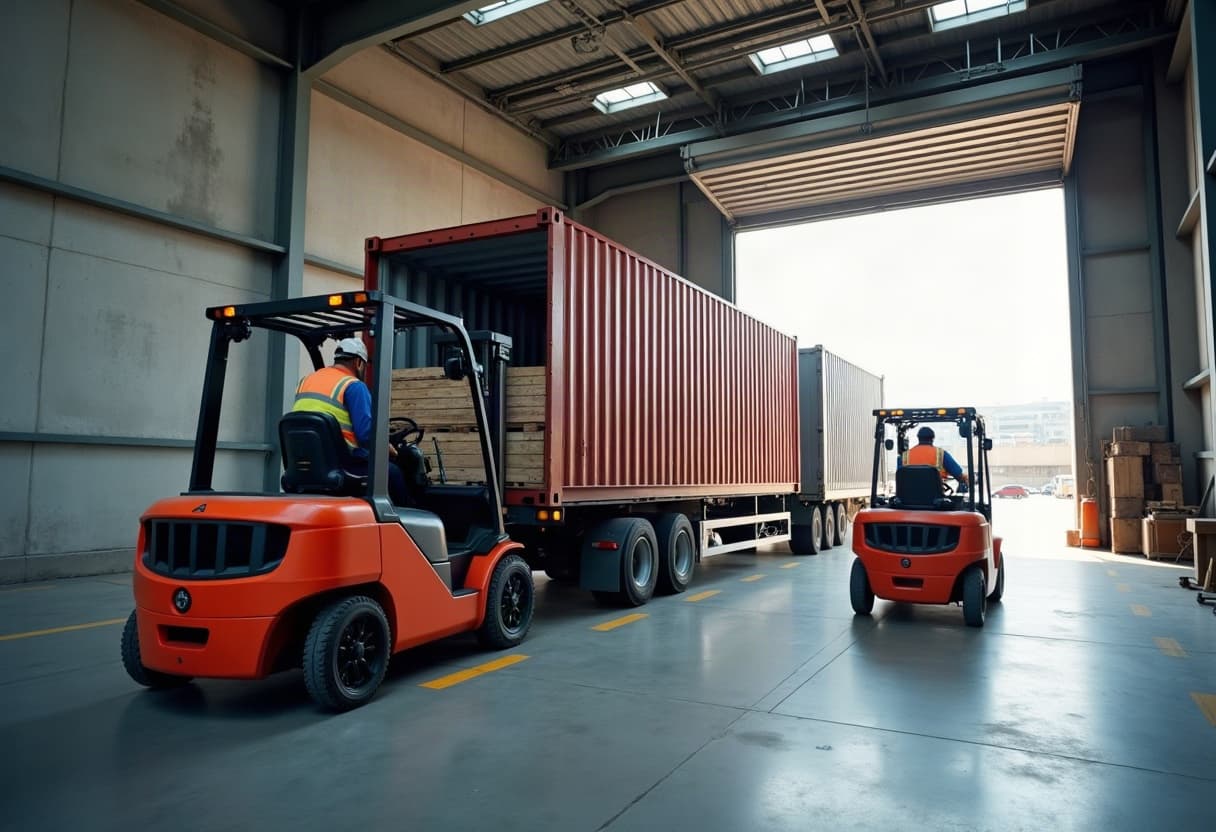
If you typed "transloading near me" into a search bar, you probably have an ocean container sitting at the Port of Seattle or Port of Tacoma, and you need to get the cargo out of that container and into a domestic trailer before the per-diem charges start piling up. Or you are a freight forwarder looking for a warehouse that can receive, transfer, and redistribute cargo without adding days to the supply chain.
Either way, the question is the same: what should you look for in a transloading partner, and why does the location of that warehouse matter as much as the services it offers?
What transloading actually involves
Transloading is the transfer of cargo from one mode of transport to another. In the Pacific Northwest import supply chain, the most common transloading scenario is:
- An ocean container arrives at the Port of Seattle or Port of Tacoma.
- A drayage carrier hauls the container to a nearby warehouse.
- The warehouse team unloads the container — a process called devanning — and stages the cargo.
- The cargo is reloaded into a domestic 53-foot dry van trailer, or stored temporarily until the outbound truck is ready.
- The empty ocean container is returned to the port or depot, closing out the container cycle.
This process matters because ocean containers are expensive to hold. Marine carriers charge per-diem fees for each day the container sits outside the terminal, and ports charge demurrage for containers that exceed free time. The faster you can get cargo out of the container and into a domestic trailer, the lower your costs.
Transloading also enables flexibility. A single 40-foot ocean container might hold cargo destined for three different locations. A transloading warehouse can sort the freight, reload it into separate trailers, and dispatch them independently — something that is impossible with the original container.
What to look for in a transloading warehouse
Not every warehouse can transload efficiently. When you are searching for transloading services near you, look for:
-
Proximity to the ports. The shorter the drayage distance from the port to the warehouse, the lower your drayage costs and the faster your container gets unloaded. A warehouse in the Kent Valley is roughly 15 miles from both the Port of Seattle and the Port of Tacoma — close enough for same-day container delivery and empty return.
-
Dock capacity and equipment. Transloading requires forklifts, pallet jacks, dock doors, and trained labor. A warehouse with multiple dock doors can process several containers simultaneously, reducing wait times and turnaround.
-
Cross-dock capability. The best transloading warehouses include cross-docking — the ability to move freight directly from an inbound container to an outbound trailer without intermediate storage. This keeps transit times short and reduces handling costs.
-
Container Freight Station licensing. If you import less-than-container-load (LCL) shipments, you need a warehouse that is a licensed Container Freight Station. The CFS handles deconsolidation, documentation, and sorting of shared-container cargo.
-
Storage flexibility. Sometimes the outbound trailer is not ready the same day. A warehouse that offers short-term storage alongside transloading gives you a buffer without forcing you to move the freight to a separate facility. Warehousing and storage services in Kent, WA cover this in more detail.
How All Season Warehouse handles transloading
All Season Warehouse operates a 200,000 sq ft CTPAT-secured facility in the Kent Valley, positioned between the Port of Seattle and Port of Tacoma along the I-5 corridor. The warehouse provides transloading and cross-dock services that include:
- Ocean-to-truck transloading — unloading ocean containers and reloading cargo into domestic 53-foot trailers
- Container devanning — removing palletized or floor-loaded cargo from shipping containers
- Cross-docking — transferring inbound freight directly to outbound trailers with minimal storage time
- Container Freight Station services — LCL consolidation and deconsolidation for importers who share container space
The process is straightforward. A drayage carrier delivers the container from either port to the warehouse dock — typically a 30-to-45-minute drive. The warehouse team unloads the cargo using forklifts and manual labor as needed, sorts it, and reloads it into the outbound trailer or stages it for storage. The empty container is returned to the port or depot the same day, minimizing demurrage and per-diem exposure.
Because the facility is in the Kent Valley, drayage distances are short, unloading is fast, and the empty return happens within hours. That keeps container-related costs down and gets freight moving toward its final destination without delay.
If you have containers arriving at the Port of Seattle or Port of Tacoma and need transloading, cross-docking, or short-term storage, contact All Season Warehouse for a same-day quote.
FAQ
What is transloading? Transloading is the process of transferring cargo from one mode of transport to another — most commonly unloading an ocean shipping container and reloading the goods into a domestic 53-foot trailer. It helps importers avoid per-diem charges and keeps freight moving toward its final destination.
How does transloading work at All Season Warehouse? All Season Warehouse receives ocean containers from the Port of Seattle or Port of Tacoma, unloads the cargo at the dock, and reloads it into domestic trailers or stores it for later distribution. The 200,000 sq ft facility includes cross-dock capability and a licensed Container Freight Station.
What is the difference between transloading and cross-docking? Transloading transfers cargo between modes (ocean container to domestic trailer). Cross-docking moves freight directly from an inbound truck to an outbound truck with minimal storage. Transloading often includes cross-docking, but the two are distinct services.
Why should I use a transloading warehouse in the Kent Valley? The Kent Valley sits between both ports along I-5. A Kent-based warehouse can receive containers in under an hour, transload quickly, and return empties the same day — minimizing demurrage and per-diem charges while keeping freight moving.
Frequently asked questions
What is transloading?+
Transloading is the process of transferring cargo from one mode of transport to another — most commonly unloading an ocean shipping container and reloading the goods into a domestic 53-foot trailer. It allows importers to avoid marine container per-diem charges, reduce storage costs, and move freight onto trucks or rail for onward distribution.
How does transloading work at All Season Warehouse?+
All Season Warehouse receives ocean containers drayed from the Port of Seattle or Port of Tacoma, unloads the cargo at the dock, and reloads it into domestic 53-foot trailers or stores it for later distribution. The 200,000 sq ft facility in the Kent Valley includes cross-dock capability and a licensed Container Freight Station for LCL deconsolidation.
What is the difference between transloading and cross-docking?+
Transloading transfers cargo between modes — such as from an ocean container to a domestic trailer. Cross-docking moves freight directly from an inbound truck to an outbound truck with minimal storage time. Transloading often includes cross-docking as part of the process, but the two are distinct: transloading changes the transport mode, cross-docking changes the vehicle.
Why should I use a transloading warehouse in the Kent Valley?+
The Kent Valley sits between the Port of Seattle and Port of Tacoma along I-5. A Kent-based warehouse can receive containers from either port in under an hour, transload the cargo quickly, and return the empty container the same day — minimizing demurrage and per-diem charges while keeping freight moving toward its final destination.