
Warehouse Companies: How to Choose a 3PL Partner
Not all warehouse companies are built the same. Here is what Pacific Northwest shippers should evaluate when choosing a 3PL warehousing partner — location, services, technology, and transparency.
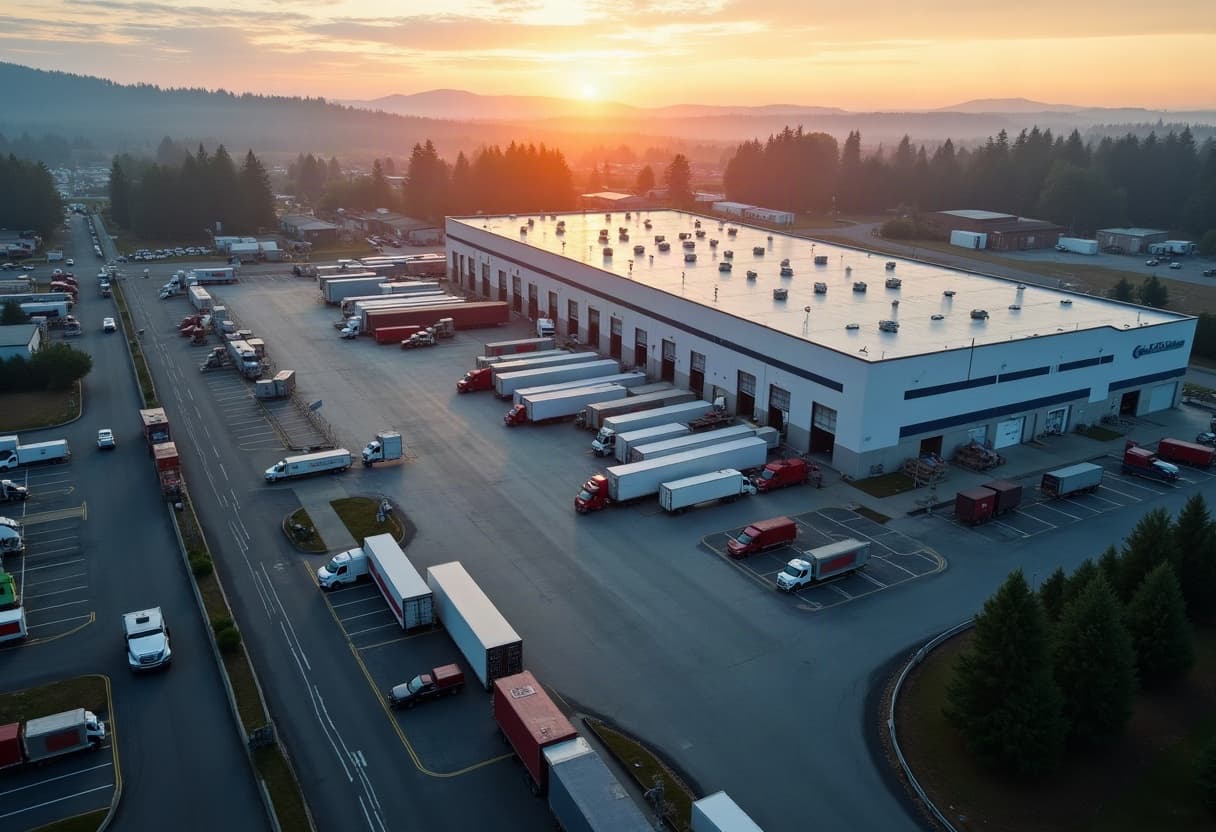
If you are shipping freight into or through the Pacific Northwest, the warehouse company you choose will shape your transit times, your inventory accuracy, and your landed costs. Not every warehouse operator offers the same services, technology, or location advantages — and the differences show up in your bottom line.
This guide covers what to evaluate when comparing warehouse companies for 3PL warehousing in the Puget Sound region.
Start with location and access
The single biggest cost variable in warehousing is not the monthly storage rate. It is drayage — the cost of trucking containers from the port to the warehouse. A warehouse 40 miles from the Port of Seattle adds an hour of drive time each way, plus fuel, plus driver hours, plus the risk of port congestion delays. A warehouse in the Kent Valley is roughly 15 miles from the Port of Seattle and 12 miles from the Port of Tacoma, with direct interstate access via I-5 and SR 167.
When comparing warehouse companies, ask:
- How far are they from the Port of Seattle and Port of Tacoma?
- Do they have access to rail intermodal ramps?
- What is their average drayage time from the ports during peak hours?
- Are they positioned to serve both Seattle and Tacoma freight flows?
A Kent Valley warehouse can typically dray a container from either port in 30 to 45 minutes off-peak and 60 to 90 minutes during peak traffic. A warehouse in south Pierce County or north Snohomish County may double those times.
Match services to your operational needs
Warehouse companies offer different service menus. Some provide pure storage — you rent space and manage everything else. Others are full 3PL operations that handle the entire flow of goods. Know what you need before you compare quotes.
Core services to ask about:
| Service | What It Covers | Who Needs It | |---------|---------------|--------------| | Cross-docking | Direct transfer from inbound to outbound, minimal storage | High-velocity shippers, retailers with store deliveries | | Transloading | Transfer between transportation modes (rail to truck, ocean to truck) | Importers bringing in ocean containers or rail freight | | Order fulfillment | Receiving, picking, packing, shipping individual orders | E-commerce and retail shippers | | Climate-controlled storage | Temperature and humidity management | Food, beverage, electronics, pharma | | Container unloading | Stripping ocean containers, palletizing, receiving | Importers | | Short-term storage | Flexible storage for seasonal surges or overflow | Shippers with variable inventory |
A warehouse company that only offers long-term storage will not help you if your business model depends on fast cross-dock turnaround. Make sure the services they list are services they actually perform — not services they outsource to a third party you will never meet.
Evaluate inventory technology
A warehouse company that cannot tell you exactly where your goods are at any moment is not a partner you can scale with. Ask what inventory management system they use, whether you get real-time access, and how they handle receiving discrepancies.
The minimum you should expect:
- Real-time inventory visibility through a web portal or API
- Barcode or RFID scanning at receiving and shipping
- Receiving reports within 24 hours of container arrival
- Cycle count programs (not just annual physical inventory)
- Integration with your e-commerce platform or ERP if you need it
If the answer to "how do I check my inventory" is "call us and we will look it up," that warehouse company is operating on systems that are 20 years behind.
Check certifications and compliance
Different product categories carry different requirements. Food and beverage products require food-grade certified storage, which means documented pest control programs, temperature monitoring, allergen segregation, and in many cases a third-party audit such as AIB or SQF. Electronics may require climate control and ESD-safe handling. Hazardous materials require specific certifications and segregation protocols.
Ask the warehouse company:
- Do you hold food-grade certification? Can you provide audit reports?
- Do you have experience handling my product category?
- What insurance coverage do you carry, and what are the limits?
- Have you had any loss or damage claims in the past 12 months?
Understand pricing structure
Warehouse companies price in different ways. Some charge by the pallet per month. Others charge by square foot. Some bundle handling fees into storage rates; others bill every touch separately. A low storage rate can mask high handling fees that make the total cost higher than a competitor with transparent pricing.
Ask for a rate card that shows:
- Storage rate (per pallet, per square foot, or per unit)
- Receiving fee (per container, per pallet, or per unit)
- Handling fees (pick and pack, cross-dock, transloading)
- Outbound shipping fees
- Fuel surcharges or accessorial fees
Compare total estimated monthly costs, not just the headline storage rate. A warehouse that charges $18 per pallet but $0 in handling may be cheaper than one that charges $12 per pallet plus $6 in handling fees per touch.
Why Kent Valley warehouse companies have an edge
The Kent Valley — running from Tukwila through Kent and into Sumner and Puyallup — is the densest warehousing corridor in the Pacific Northwest. It has the largest concentration of Class A distribution space, direct rail access via the BNSF main line, and interstate access to both major ports. When you choose a warehouse company in this corridor, you are choosing a partner that can dray from the ports faster, access rail intermodal, and reach the Seattle and Tacoma metro markets for final-mile delivery within the same day.
All Season Warehouse operates from the Kent Valley, offering cross-docking, transloading, food-grade storage, container unloading, order fulfillment, and flexible short-term and long-term storage. If you are comparing warehouse companies for Pacific Northwest freight, contact us to discuss your operational requirements.
Ready to find the right warehouse partner? Contact All Season Warehouse to discuss your storage and fulfillment needs, explore our warehouse services, or learn more about the Kent Valley logistics corridor.
Frequently asked questions
What should I look for when choosing among warehouse companies?+
Look for proximity to your inbound freight sources (ports, rail terminals, supplier locations), the specific services you need (cross-docking, climate-controlled storage, fulfillment), inventory tracking technology, security standards, and transparent pricing. A warehouse company that cannot tell you exactly where your goods are at any given moment is not a partner you can scale with.
What is a 3PL warehouse and how is it different from a standard warehouse?+
A 3PL (third-party logistics) warehouse does more than store your goods. It handles receiving, inventory management, order fulfillment, pick-and-pack, cross-docking, transloading, and shipping. A standard warehouse may only provide space. A 3PL warehouse company acts as an operational extension of your business, managing the flow of goods from inbound delivery to final-mile shipping.
Why does warehouse location matter in the Pacific Northwest?+
Location determines drayage costs, transit times, and access to ports and rail. A warehouse in the Kent Valley is roughly 15 miles from the Port of Seattle and 12 miles from the Port of Tacoma, with direct access to I-5 and SR 167. This cuts drayage time and cost compared to a warehouse located 40 or 50 miles from the ports.
How do I know if a warehouse company can handle my product type?+
Ask whether they have experience with your product category. Food and beverage products require food-grade certified storage. Electronics require climate control and ESD-safe handling. Oversized freight requires high-clearance doors and heavy-duty racking. A warehouse company that cannot reference current clients in your product category may not be the right fit.
Does All Season Warehouse work with Pacific Northwest shippers looking for a 3PL partner?+
Yes. All Season Warehouse operates from the Kent Valley, offering cross-docking, transloading, food-grade storage, container unloading, order fulfillment, and short-term and long-term storage. We serve shippers moving freight through the Port of Seattle, Port of Tacoma, and the broader PNW region.