
Container Unloading: How It Works, What It Costs, and Why It Matters for Importers in the Kent Valley
Container unloading (devanning) strips import containers fast and safely. Learn how container unloading services work, what they cost per container, and how to choose a provider near the Port of Seattle and Kent Valley.
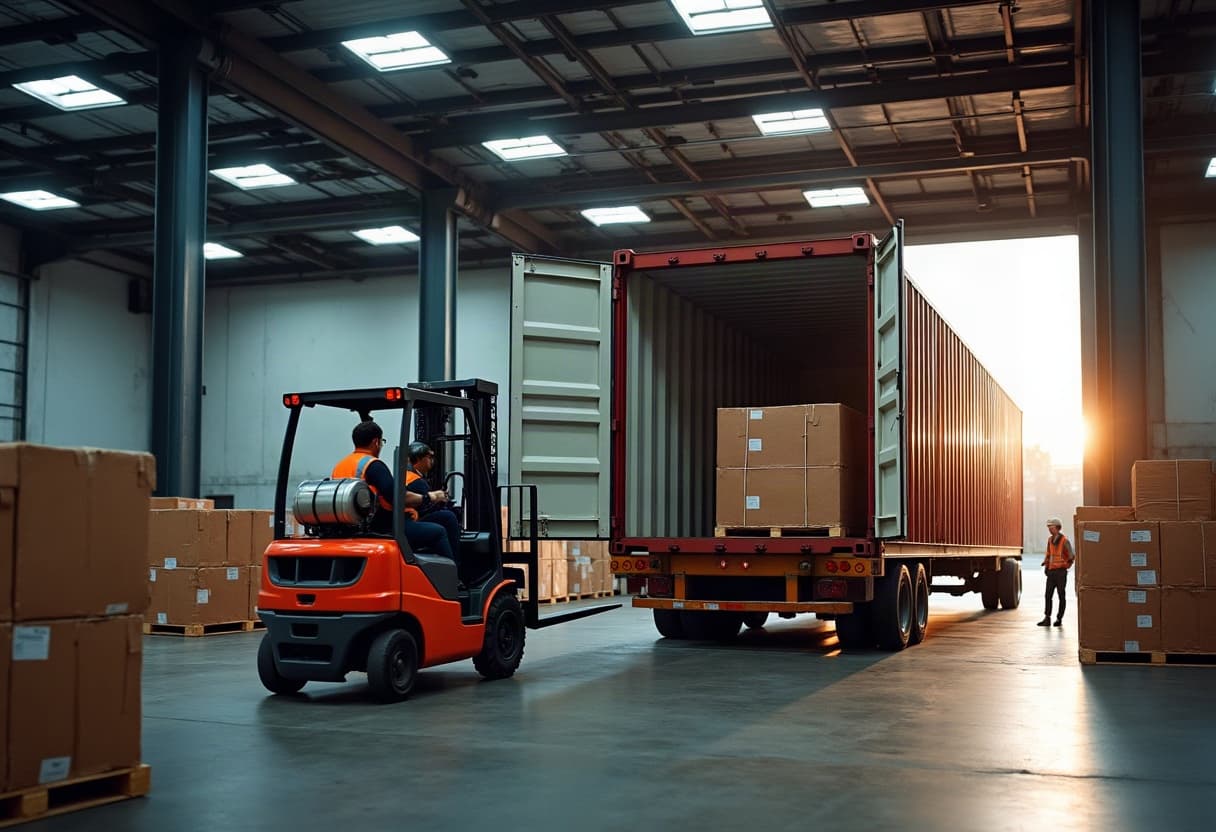
A sealed 40-foot container arrives at your warehouse door in Kent with 1,800 cartons of imported goods floor-loaded from floor to ceiling. There is no pallet inside. The container is on a chassis that the drayage carrier wants back at the port in four hours. This is the moment most importers realize they need a container unloading service — not just a warehouse, but a crew that can devan a container fast, palletize the freight, count it against the manifest, and put it away before chassis detention fees start compounding.
Container unloading — also called devanning or container stripping — is one of the most labor-intensive and time-sensitive jobs in import logistics. This guide explains how the process works, what drives the cost, and how to choose a container unloading provider in the Kent Valley and Seattle metro that will not leave you paying detention fees or losing inventory to a miscount.
What Container Unloading (Devanning) Actually Involves
Container unloading is not just opening the doors and pulling boxes out. A proper devanning service follows a sequence that protects both the cargo and the inventory record.
Receiving and seal verification. The container arrives sealed with a bolt seal carrying a serial number that must match the bill of lading. The warehouse records the seal number, breaks it, and documents any discrepancy before the doors open. This step is what makes a devanning receipt legally defensible if the shipper later claims a shortage.
Unloading by cargo type. Pallet-loaded containers come out fast — a forklift pulls each pallet and stages it. Floor-loaded containers, where a foreign factory hand-stuffed cartons from wall to wall with no pallets, are the slow and expensive case. A crew hand-carries or hand-trucks every carton out of the box and stacks it on pallets at the dock.
Palletization and labeling. Loose cartons get palletized to a standard 48x40 footprint, stretch-wrapped, and labeled with the SKU or receiving lot. Without this step, downstream pick-and-pack has nothing to pull from. A good devanning operation palletizes as it unloads so the freight is warehouse-ready the moment the container is empty.
Count and inspection. The crew counts each carton against the packing list and inspects for visible damage. Any overage, shortage, or damage gets photographed and noted on the devanning receipt. This count is the inventory record that your WMS inherits — getting it wrong here means your system is wrong forever.
Putaway. Palletized freight moves from the dock to its storage location under the warehouse management system. The container is released, the chassis goes back to the port, and the inventory is available for pick, pack, and ship.
What Drives the Cost of Container Unloading
Container unloading is quoted two ways in the Kent Valley market, and the difference matters.
Flat per-container rate. Most warehouse providers quote a flat rate per 40-foot or 20-foot container that covers receiving, seal break, unload, and basic count. Floor-loaded containers carry a premium because the labor time is two to four times longer than a pallet-loaded box. Expect $200 to $450 per 40-foot container for pallet-loaded freight, and a higher flat rate or an hourly crew rate for hand-stripped floor loads.
Per-pallet charge. If the freight arrives loose and needs palletization, most providers add a per-pallet charge covering the pallet, the wrap, the label, and the labor to stack. This charge typically runs $6 to $12 per pallet built.
The variables that move the quote: piece count (a container with 1,800 small cartons costs more than one with 22 pallets), carton weight (heavy cartons slow the crew), hazardous or food-grade requirements (food-grade devanning requires a sanitized dock and food-safe handling), and whether you need the freight cross-docked straight onto an outbound trailer rather than put away in storage.
Why Container Unloading Belongs at a Warehouse, Not at Your Driveway
Some importers try to devan containers at their own facility to save the warehouse fee. This usually backfires for three reasons.
First, chassis detention. The drayage carrier wants their chassis back. If you cannot unload in the allotted free time, detention fees compound daily. A warehouse with dock-high doors and a dedicated crew hits that window reliably; a loading dock you share with your own operations does not.
Second, labor surges. Hand-stripping a floor-loaded 40-foot container takes a four-person crew working most of a shift. Most importers do not keep that crew on payroll for the two or three containers a month they receive.
Third, inventory accuracy. The count done at devanning is the count that enters your system. A warehouse that devans containers every day has the discipline, the warehouse management system, and the receiving process to get that count right. A one-off unload at your dock usually produces a count someone has to reconcile later.
Choosing a Container Unloading Provider in the Kent Valley
The Kent Valley sits between the Port of Seattle and the Port of Tacoma, which makes it the natural devanning location for Pacific Northwest importers. When you evaluate a container unloading provider, look for four things.
Dock-high doors and equipment. A warehouse that devans containers needs dock-high doors, forklifts rated for the pallet weights, pallet jacks, and a supply of pallets and wrap on hand. Ground-level unloading from a ramp is slower and riskier.
A real WMS with receiving. The devanning count should flow straight into a computerized inventory management system that you can query for location and quantity. A clipboard-and-spreadsheet operation is where inventory discrepancies start.
Cross-docking capability. If your supply chain moves freight from the container straight to an outbound truck, you need a provider that can cross-dock rather than put away. Not every warehouse can do both.
Chassis management. A provider that receives containers regularly knows how to manage chassis return to the Port of Seattle or Port of Tacoma without incurring detention. Ask how they handle same-day chassis return.
Container Unloading at All Season Warehouse
All Season Warehouse operates a 200,000 square foot facility at 22408 76th Ave S, Suite 200, Kent, WA 98032 — minutes from the Port of Seattle and Port of Tacoma drayage lanes. We receive import containers, break seals, devan pallet-loaded and floor-loaded freight, palletize loose cartons, count against the manifest, and put inventory away under chain-of-custody tracking in our warehouse management system.
We serve importers and distributors across the Kent Valley, Seattle, Tacoma, Auburn, and Sumner who need their containers emptied on schedule and their inventory counted accurately the first time. If you have a container arriving and you need it devanned, palletized, and put away without chassis detention or a miscount, call us at 253-893-8864 to schedule a container appointment.
Frequently asked questions
What is container unloading (devanning)?+
Container unloading, also called devanning or container stripping, is the process of emptying a shipping container at a warehouse and transferring the cargo into palletized inventory, bonded storage, or outbound trailers. A devanning service receives the sealed container, breaks the seal, hand-unloads or forklifts the freight out, palletizes loose cartons, counts and inspects the cargo against the manifest, and puts it away in the warehouse management system.
How much does container unloading cost in the Kent Valley?+
Container unloading in the Kent Valley typically runs between $200 and $450 per 40-foot container depending on cargo type, piece count, palletization requirements, and whether the freight is floor-loaded or pallet-loaded. Hand-unloaded floor-loaded containers cost more than pallet-loaded containers because of the labor time. Most warehouse providers quote a flat per-container rate plus a per-pallet charge for palletization.
How long does it take to unload a shipping container?+
A pallet-loaded 40-foot container can be unloaded in under an hour with a forklift. A floor-loaded container that must be hand-stripped and repalletized takes three to six hours depending on piece count and carton weight. Most Kent Valley warehouses schedule container appointments in four-hour windows to cover variability.
Does All Season Warehouse handle container devanning?+
Yes. All Season Warehouse operates a 200,000 sq ft facility at 22408 76th Ave S, Suite 200, Kent, WA 98032 with dock-high doors, forklifts, palletizers, and a computerized inventory management system. As part of our transloading and cross-docking services we devan import containers arriving from the Port of Seattle and Port of Tacoma — stripping the container, palletizing loose freight, and putting away inventory under chain-of-custody tracking. Call us at 253-893-8864 to schedule a container devanning appointment.