
Storage and Distribution: A Practical Buyer's Guide for Pacific Northwest Businesses
Comparing storage and distribution providers in the Kent Valley and Seattle metro? Learn what services matter, how pricing works, and how to choose a warehouse that moves your freight — not just stores it.
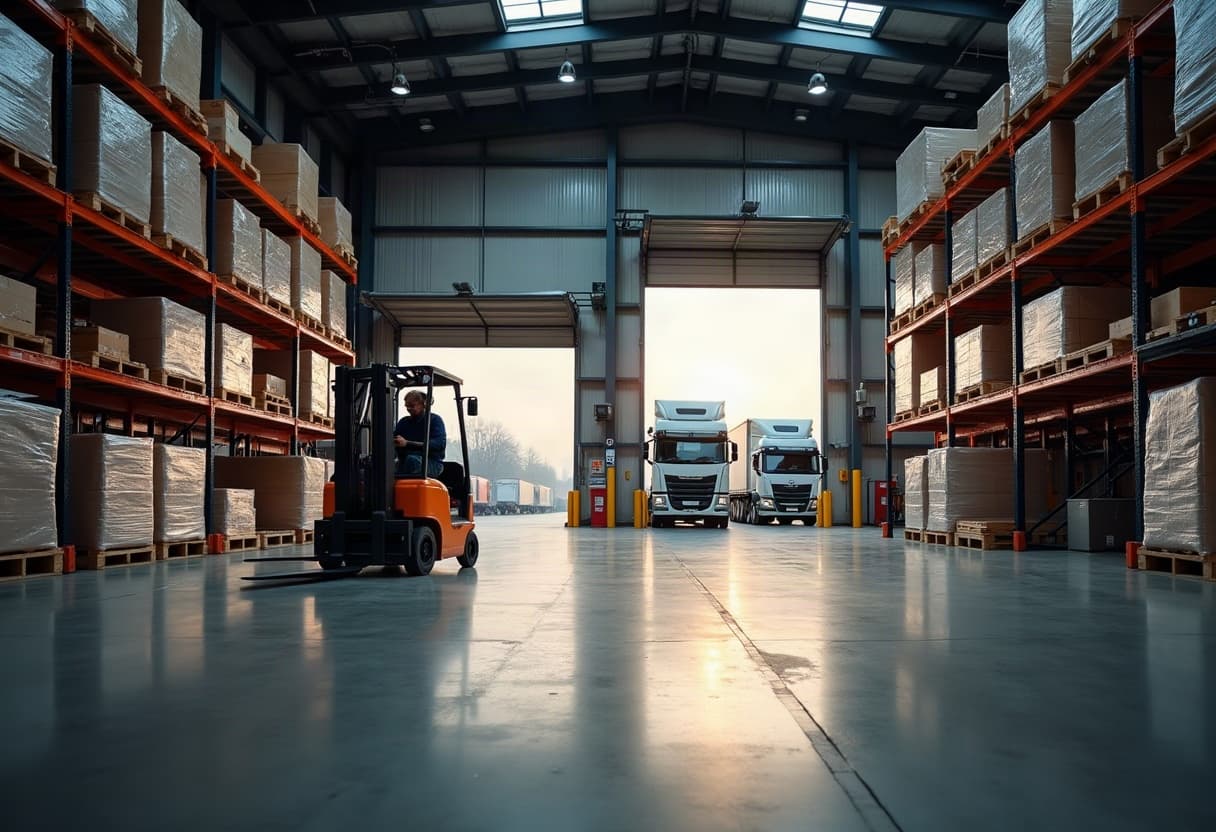
If you are searching for "storage and distribution" services in the Pacific Northwest, you are likely looking for more than a place to park pallets. You need a warehouse that stores your inventory safely and then actually moves it — picking orders, loading trucks, and delivering to your customers or retail partners on time. Too many facilities offer storage but leave the distribution side to you, which means coordinating a separate carrier, managing your own pickup schedule, and paying for freight moves that a combined warehouse-and-trucking operation could handle in one transaction.
This guide breaks down what to look for in a storage and distribution provider, how pricing works in the Kent Valley and Seattle metro, and why combining both services under one roof saves money and reduces supply chain friction.
What "storage and distribution" actually covers
Storage and distribution is a combined service model where a single warehouse provider handles both the safekeeping of your inventory and its outbound movement. Here is what each side involves:
Storage means receiving your inbound freight (ocean containers, LTL shipments, or full truckloads), putting product away in the right location, and maintaining an accurate inventory count through a warehouse management system (WMS). It includes cycle counting, inventory reporting, and condition monitoring so you always know what you have and where it is.
Distribution means taking that stored inventory and fulfilling outbound orders — picking the right SKUs, packing them for shipment, loading outbound trucks, and arranging delivery to your end destination. For importers, it also includes transloading (moving product from an ocean container directly into a domestic trailer) and drayage (truck moves between the port and the warehouse).
The key distinction: a storage-only facility holds your product. A storage-and-distribution provider holds your product and then ships it. If your business sells to retailers, runs e-commerce fulfillment, or distributes across the Pacific Northwest, you need both — and managing them separately with two vendors adds cost, delay, and coordination overhead.
How storage and distribution pricing works in the Kent Valley
Pricing for combined storage and distribution services in the Kent Valley and Seattle metro typically breaks down into three components:
-
Storage fees — pallet storage runs $15–$25 per pallet per month for shared warehouse space. Dedicated square-footage leases run $0.60–$1.20 per square foot monthly with a minimum commitment. Rack positions and specialty storage (climate-controlled, food-grade, high-security) carry premium rates. See the warehouse rental guide for a detailed pricing breakdown by storage type.
-
Handling fees — these cover receiving (inbound), putaway, picking, and loading (outbound). Inbound receiving is often billed per pallet or per container devanned. Outbound handling runs $8–$20 per pallet depending on whether it is a full-pallet pick or a case-level pick-and-pack. Transloading — moving product from an ocean container to a domestic trailer — is billed per container or per pallet.
-
Freight and drayage — if your warehouse provider also operates trucks, drayage from the Port of Seattle or Port of Tacoma to a Kent Valley warehouse runs roughly $250–$450 per container. Outbound distribution freight (full truckload or LTL to your customer) is priced per mile or per lane. The advantage of a combined warehouse-and-trucking operation is that drayage, storage, and outbound distribution are coordinated by one team, eliminating the handoff delays that occur when you use a separate port drayage carrier, warehouse, and outbound freight broker.
What to look for in a storage and distribution provider
Not every warehouse that ranks for "storage and distribution" actually offers a true combined service. Here are the capabilities that matter:
Port access and drayage capability
If you import through the Ports of Seattle or Tacoma, your warehouse needs to be close enough that drayage is a short, predictable move. The Kent Valley sits between both ports along I-5 — a truck can reach either marine terminal in under an hour. A warehouse without its own drayage fleet forces you to contract a separate port carrier, adding a vendor and a handoff. Learn more in the Kent Valley logistics hub overview.
Computerized inventory control and EDI
If you sell to major retailers, EDI (electronic data interchange) is non-negotiable. Your warehouse must send and receive purchase orders, advance ship notices, and inventory feeds electronically. A WMS with EDI capability is the baseline for retail compliance — without it, you risk chargebacks and rejected shipments. All Season Warehouse runs computerized inventory control with EDI as a standard capability.
Transloading and cross-dock
Many importers do not need long-term storage — they need product moved from an ocean container into a domestic trailer and shipped out the same day. This is transloading, and it requires dock doors, forklifts, and crews who can devan a container quickly. A warehouse that only stores product but cannot transload forces you to find a separate cross-dock facility, adding a freight move and a day of delay. See the transloading and cross-dock guide for how this service works.
Outbound distribution fleet
The distribution side only works if the warehouse can actually move freight out the door. A warehouse with an affiliated trucking fleet can pick your order, load the truck, and deliver it — all under one roof and one invoice. Warehouses without trucks are limited to handing your order to a third-party carrier, which means you are back to coordinating multiple vendors.
Why All Season Warehouse covers both sides
All Season Warehouse operates a 200,000 sq ft facility at 22408 76th Ave S, Suite 200, Kent, WA 98032 — minutes from both the Port of Seattle and Port of Tacoma. The facility offers pallet storage, rack positions, dedicated warehouse space, container devanning, transloading, and cross-dock services. Distribution is handled by sister carrier All Season Transport LLC (USDOT 2927850, MC 988260), which operates a 55-truck fleet for drayage and regional delivery.
This combined model means an importer can bring an ocean container from the port, devan it at the warehouse, store the pallets, and then ship outbound orders — all coordinated by one team, tracked in one WMS, and billed on one account. Inventory is managed with computerized inventory control and EDI capability, so retail trading partners receive electronic advance ship notices and inventory feeds without manual reconciliation.
For businesses that need both storage and distribution in the Pacific Northwest, the Kent Valley remains the most efficient corridor — and a combined warehouse-and-trucking operation eliminates the vendor handoffs that slow down supply chains and inflate freight costs. If you are comparing providers, ask whether they handle drayage, storage, and outbound distribution under one roof, or whether you will be coordinating three separate vendors. That answer tells you more about your real cost and lead time than any rate sheet will.
Frequently asked questions
What is the difference between storage and distribution?+
Storage is the safekeeping of inventory in a warehouse — receiving pallets, putting them away, and tracking what you have. Distribution is the active movement of that inventory outbound — picking orders, loading trucks, and delivering to end destinations. Most businesses need both: a warehouse that stores product safely and then ships it on demand. A storage-only facility without distribution capability forces you to arrange your own trucking, which adds cost and coordination overhead.
How much does storage and distribution cost in the Kent Valley?+
Pallet storage in the Kent Valley typically runs $15 to $25 per pallet per month, while dedicated warehouse space leases from $0.60 to $1.20 per square foot monthly. Distribution charges depend on volume — outbound pallet handling fees range from $8 to $20 per pallet, and full-truckload drayage from the Ports of Seattle or Tacoma to a Kent warehouse runs roughly $250 to $450 per container depending on distance and fuel surcharges.
Why choose a Kent Valley warehouse for storage and distribution?+
The Kent Valley sits between the Port of Seattle and Port of Tacoma along I-5, meaning drayage trucks can move ocean containers from either port to a Kent warehouse in under an hour. The valley also has direct access to I-405, SR-167, and I-90, so product stored in Kent can reach Seattle, Tacoma, Bellevue, and the broader Pacific Northwest within a day's drive. This port-and-highway proximity is why the Kent Valley is the dominant warehousing corridor in the region.
Does All Season Warehouse offer both storage and distribution?+
Yes. All Season Warehouse operates a 200,000 sq ft facility at 22408 76th Ave S, Suite 200, Kent, WA 98032 — minutes from both ports. We offer pallet storage, rack positions, dedicated warehouse space, container devanning, transloading, and distribution via a 55-truck fleet operated by sister carrier All Season Transport LLC (USDOT 2927850, MC 988260). Inventory is tracked with computerized WMS and EDI capability.