
Warehouse Rental: A Practical Guide to Comparing Options and Pricing
Comparing warehouse rental options in the Kent Valley and Seattle metro? Learn pallet vs. rack vs. dedicated space pricing, lease structures, and how to choose the right provider.
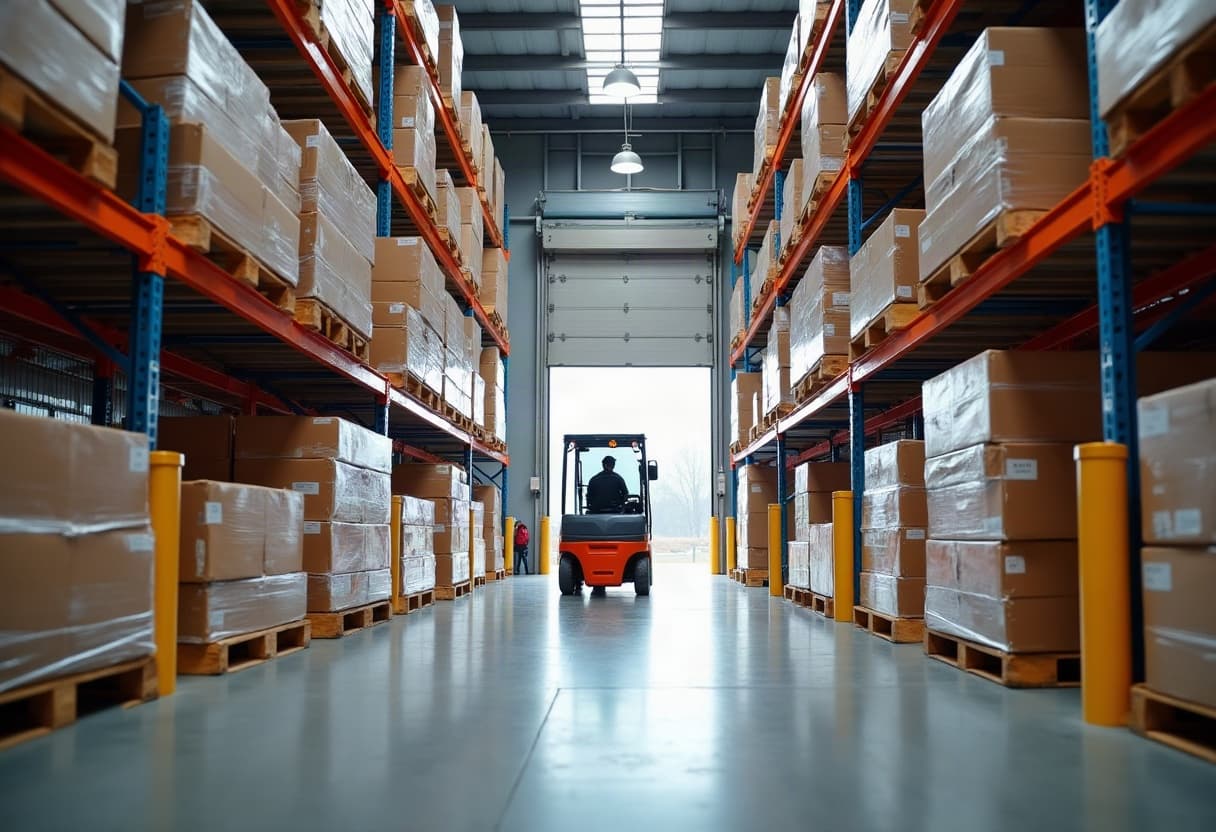
If you are searching for "warehouse rental" in the Pacific Northwest, you are probably looking at a mix of pallet storage rates, per-square-foot leases, and 3PL contracts — and trying to figure out which model actually fits your operation. The term "warehouse rental" gets used for everything from a single pallet position to a 50,000 sq ft dedicated lease, and the pricing structures are completely different for each.
This guide breaks down the three main warehouse rental models, what they cost in the Kent Valley and Seattle metro, and what to look for when choosing a provider so you do not end up paying for space you do not need — or worse, stuck without capacity when your volume spikes.
The three warehouse rental models
1. Pallet storage (pay per position)
Pallet storage is the most flexible and most common entry point for businesses that need warehouse space without a long-term lease. You pay a monthly rate per pallet position — typically $15–$25 per pallet in the Kent Valley — and the warehouse operator handles receiving, putaway, inventory tracking, and outbound loading.
This model works well for:
- Importers devanning ocean containers and needing temporary storage
- E-commerce brands with moderate SKU counts
- Seasonal inventory overflow
- Businesses testing a new market before committing to dedicated space
The downside is that per-pallet pricing becomes expensive above 50–100 pallets. At that volume, a dedicated space lease usually costs less.
2. Rack and bin storage (pay per position, smaller units)
For businesses with smaller units — cartons, cases, individual SKUs — rack and bin storage is the equivalent of pallet storage but at a finer granularity. Pricing is typically quoted per cubic foot or per bin position. This model suits e-commerce fulfillment, small-parts distribution, and high-SKU retail inventory.
3. Dedicated warehouse space (lease by the square foot)
Dedicated space rental means you lease a specific area — often caged or taped off — within a larger warehouse. You pay per square foot per month, usually $0.60–$1.20 in the Kent Valley, with a minimum commitment (often 5,000–10,000 sq ft). You typically manage your own product handling, or negotiate a bundled labor rate with the warehouse operator.
This model works for:
- Distributors with steady volume and their own warehouse processes
- Businesses needing branded or segregated storage
- Operations that outgrew pallet storage pricing
For a deeper comparison of dedicated space options, see our warehouse space guide.
Warehouse rental pricing in the Kent Valley
The Kent Valley — the industrial corridor along I-5 between Seattle and Tacoma — is the most competitive warehouse rental market in the Pacific Northwest. Pricing here is lower than Seattle proper and Tacoma's port-adjacent submarket, with the advantage of being minutes from both ports.
Typical rates (as of 2026):
| Model | Rate Range | Best For | |-------|-----------|----------| | Pallet storage | $15–$25/pallet/mo | < 100 pallets, flexible volume | | Rack/bin position | $8–$18/bin/mo | Small units, high SKU count | | Dedicated space | $0.60–$1.20/sq ft/mo | > 5,000 sq ft steady volume | | Short-term overflow | $20–$35/pallet/mo | Days to weeks, no commitment |
Short-term overflow carries a premium because it requires the warehouse to hold capacity without a commitment. For planned seasonal spikes, booking ahead at standard pallet rates is cheaper. See our short-term warehouse storage guide for when this makes sense.
What to look for when choosing a warehouse rental provider
Proximity to your freight lanes
The biggest hidden cost in warehouse rental is not the per-pallet or per-square-foot rate — it is the drayage and trucking cost to move freight in and out. A warehouse that is $0.10 cheaper per pallet but 30 miles further from the port will cost more in total logistics spend.
For importers moving containers through the Port of Seattle or Port of Tacoma, a Kent Valley warehouse is the sweet spot — under an hour of drayage from either port, with I-5 and SR-167 access for inland distribution. Learn more in our Kent Valley logistics hub guide.
Facility security and access control
A warehouse rental is only as good as the security around it. Look for:
- Fenced and gated yard
- Access-controlled doors
- 24/7 monitoring or surveillance
- Background-checked staff
Inventory technology
If you are storing inventory that feeds a retail partner or e-commerce channel, the warehouse needs computerized inventory control — ideally with WMS (warehouse management system) and EDI capability. A warehouse that tracks inventory on a spreadsheet will not meet retail compliance requirements. For fulfillment-specific needs, see our warehousing and fulfillment guide.
Flexibility on volume changes
Your warehouse rental should scale with your business. Ask:
- Can I add or remove pallet positions month-to-month?
- Is there a penalty for reducing volume?
- How fast can additional space be allocated?
On-site drayage and transloading
The most valuable warehouse rental is one where drayage and transloading are available on-site. Instead of hiring a separate trucking company to move containers from the port to the warehouse, then another to move product out, a single operator handles the full chain. This reduces handoffs, accountability gaps, and total cost.
Why All Season Warehouse is a Kent Valley warehousing provider
All Season Warehouse operates a 200,000 sq ft facility at 22408 76th Ave S, Suite 200, Kent, WA 98032 — minutes from the Ports of Seattle and Tacoma along the I-5 / SR-167 corridor. The facility offers:
- Pallet storage, rack positions, and dedicated warehouse space — flexible models from single pallets to caged areas
- A 55-truck fleet for on-site drayage, transloading, and distribution — no separate carrier needed
- Computerized inventory control with EDI capability — retail-compliant tracking
- Container Freight Station on-site — LCL handling and devanning
- Customs bonded operations — in-bond cargo storage
- Cargo classes including dry, chilled, frozen, high-value, apparel, and industrial
The facility handles transloading and cross-docking for importers who need containers devanned and product stored in one move, and pallet storage for businesses that need flexible per-position pricing.
How to get a warehouse rental quote
To get an accurate quote, you will need:
- Volume — number of pallets, square footage, or bin positions needed
- Cargo type — dry, chilled, frozen, hazmat, high-value
- Inbound freight — port containers, LTL, FTL, or parcel
- Outbound requirements — pick-and-pack, LTL consolidation, retail compliance
- Timeline — start date and expected duration
With those details, a warehouse operator can quote a per-pallet rate, per-square-foot lease, or a bundled 3PL contract that includes storage plus handling and distribution.
Contact All Season Warehouse at (253) 246-2125 or ops@allseasonwarehouse.com to discuss your warehousing needs, or explore our warehouse services for a full breakdown of storage, transloading, and distribution options.
Bottom line
Warehouse rental is not one product — it is three different models (pallet storage, rack/bin positions, dedicated space) with different pricing, commitment levels, and use cases. The right choice depends on your volume, cargo type, and whether you need just storage or a full storage-plus-distribution operation. In the Kent Valley, the advantage is not just price — it is proximity to both ports, I-5 access, and the ability to bundle drayage and transloading with storage under one roof.
Frequently asked questions
How much does warehouse rental cost in the Kent Valley?+
Warehouse rental in the Kent Valley typically ranges from $0.45 to $1.20 per square foot per month depending on whether you are renting pallet positions, rack space, or a dedicated leased area. Pallet storage starts around $15–$25 per pallet per month, while dedicated warehouse space leases from $0.60–$1.20 per square foot monthly with a minimum commitment.
What is the difference between pallet storage and warehouse space rental?+
Pallet storage means you pay per pallet position in a shared warehouse — the operator handles receiving, putaway, and inventory tracking. Warehouse space rental means you lease a dedicated square-footage area (caged or marked off) and typically manage your own product handling. Pallet storage is better for smaller volumes; dedicated space suits larger operations needing control.
What should I look for when choosing a warehouse rental provider?+
Look for proximity to your inbound and outbound freight lanes, facility security (fenced yard, access control), inventory technology (WMS or EDI capability), flexibility on volume changes, and transparent pricing without hidden accessorial fees. For importers, proximity to the Ports of Seattle and Tacoma and drayage capability on-site are major advantages.
Does All Season Warehouse offer warehouse space for storage?+
Yes. All Season Warehouse operates a 200,000 sq ft facility at 22408 76th Ave S, Suite 200, Kent, WA 98032 — minutes from the Ports of Seattle and Tacoma. We offer pallet storage, rack positions, dedicated warehouse space, and transloading services with a 55-truck fleet for drayage and distribution.