
Kitting Warehouse Services in Kent
Kitting warehouse services explained: what kitting is, how a 3PL bundles products into ready-to-ship kits, and how ASW handles it in the Kent Valley.
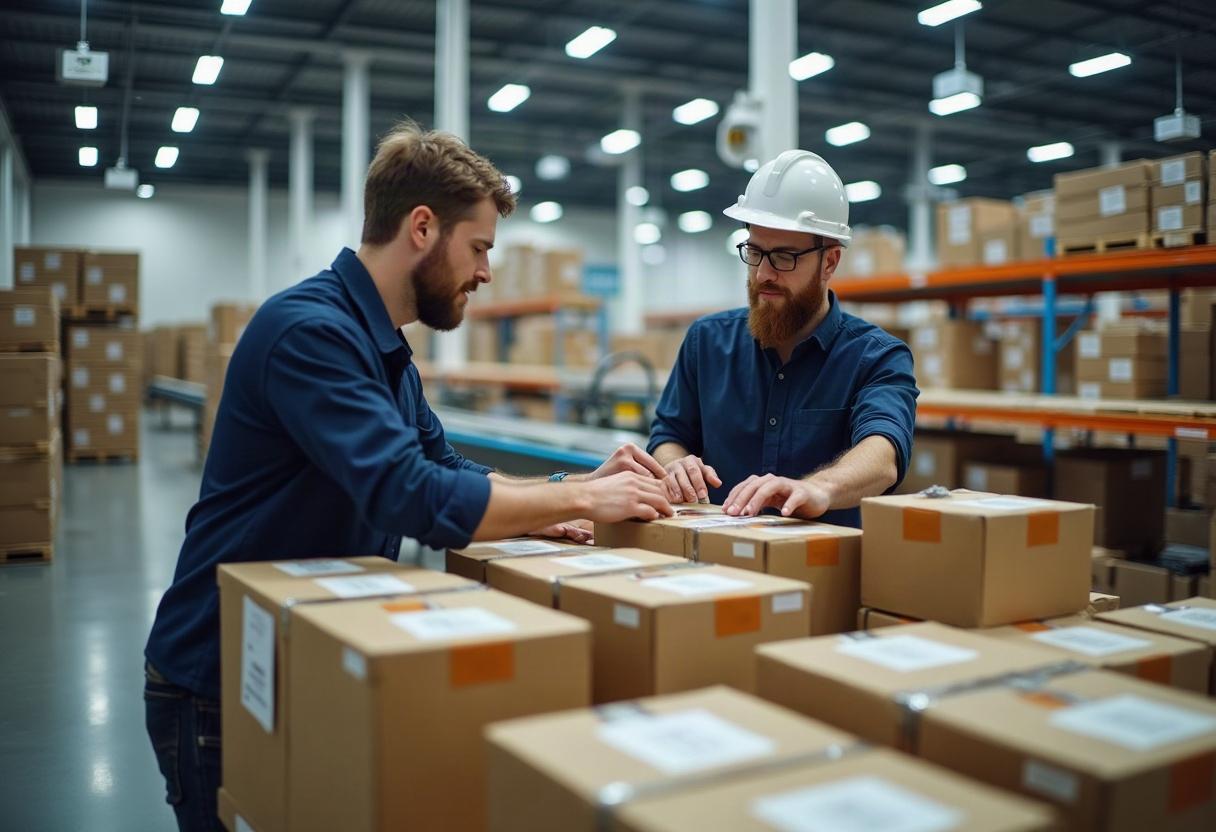
Selling a product online does not always mean shipping one item. A subscription box holds five. A retail launch kit holds the product, a display, and marketing collateral. A hardware bundle holds the tool, the battery, and the charger. If your warehouse treats each of those as separate picks, you are paying for five trips across the floor when one would do. That is the problem a kitting warehouse solves.
Kitting is the practice of assembling individual SKUs into a single bundled unit before the order ships. It is a value-added service performed inside a 3PL warehouse, layered on top of standard receiving, storage, and fulfillment. For e-commerce brands and retail shippers in the Pacific Northwest, kitting turns a multi-step pick into a single scan and gets a finished, ready-to-sell package out the door faster.
What a Kitting Warehouse Actually Does
A standard fulfillment pick goes like this: an order arrives, a picker walks to five locations, pulls five items, brings them to a pack station, and boxes them. Repeat that a thousand times and you have a lot of labor tied up in repeat trips.
A kitting warehouse collapses that loop. The component SKUs are received and stored as usual. Then, ahead of demand, a warehouse associate builds the kits to a defined bill of materials. Each finished kit gets its own kit SKU in the warehouse management system. When the order comes in, the picker pulls one kit SKU instead of five loose items.
The result is faster picks, fewer errors, and a consistent package every customer receives. For a deeper look at where kitting sits inside the broader fulfillment process, see our warehousing and fulfillment guide.
How Kitting Fits Into a 3PL Operation
Kitting is not a standalone service. It runs inside the receiving, storage, and fulfillment cycle that a 3PL already manages. Here is how the pieces connect:
1. Component receiving. Your individual SKUs arrive at the warehouse, get counted against the packing list, and are put away in their own storage locations. The warehouse management system tracks each component by SKU and quantity.
2. Kit assembly. Based on your bill of materials, a warehouse associate pulls the required components and assembles the kit. This can happen in batches to stock a known quantity of kit SKUs, or on demand when an order triggers assembly.
3. Kit storage and picking. The assembled kit is stored under its own kit SKU. When a customer orders, the picker pulls the kit as a single unit. One scan, one location, one package.
4. Outbound shipping. The kit moves to the pack station, gets its label, and ships as one parcel. Because it is a single unit, the shipping cost reflects one box rather than five.
This workflow is what separates a kitting warehouse from a storage-only facility. The warehouse is not just holding your inventory; it is transforming it into a finished, sellable product before it leaves the dock. If you are evaluating what a full-service warehouse should offer, our warehouse meaning and definition guide breaks down the difference.
Who Needs Kitting Services
Kitting serves a specific set of shipping scenarios where multiple components move as one unit:
Subscription boxes. A monthly box holds a curated set of items that changes each cycle. Kitting lets the warehouse assemble each cycle's box in one pass rather than picking five items per order.
Promotional and retail bundles. A product launch that pairs the main item with a sample, a coupon, or an accessory ships as one kit. Retail floor displays built from multiple components are assembled and labeled before they head to the store.
E-commerce gift sets. Holiday and gift bundles move as a single SKU so the customer receives one sealed package rather than a loose collection of items.
Product configurations. A tool sold with a battery and charger, a garment sold with a hanger and tag, or a device sold with a cable and insert all benefit from being assembled into a kit before fulfillment.
What a Kitting Warehouse Costs
Kitting is billed as a value-added service on top of standard storage and fulfillment rates. Pricing models vary, but the common structures are:
Per-kit assembly fee. A flat charge for each kit built, covering the labor to pull components and assemble the package.
Per-component pick fee. A charge for each individual SKU pulled during assembly, similar to a standard fulfillment pick.
Batch vs. on-demand. Kits built in batches to stock typically carry a lower per-unit assembly cost than kits built one at a time on demand.
The cost of kitting is offset by what it saves. A finished kit SKU picks in a fraction of the time of five loose components. Shipping one sealed box costs less than shipping five. And consistent assembly reduces the mispick and short-ship errors that drive customer service load. For shippers moving volume through the Kent Valley, kitting is often a net savings once the order count scales past a few hundred kits per month.
How ASW Handles Kitting in the Kent Valley
All Season Warehouse operates a 200,000 sq ft facility at 22408 76th Ave S, Suite 200, Kent, WA 98032, squarely in the Kent Valley distribution corridor between the Port of Seattle and Port of Tacoma. Kitting is part of our value-added services, performed by the same team that handles receiving, storage, and fulfillment.
That integration matters. When kitting sits with the warehouse that stores your components, there is no freight transfer between an assembly site and a ship site. The kits are built where they are stored, and they ship from the same dock that receives your inbound freight. Our team also handles labeling, quality control inspections, and returns management, so the post-assembly steps stay under one roof.
The Kent Valley location adds a freight advantage. Drayage from either Puget Sound port reaches the facility in under an hour, and parcel carriers pick up daily from the corridor. For brands that need kitting alongside cross-docking near me or standard fulfillment, the same facility handles both without a handoff.
Choosing a Kitting Warehouse Partner
Not every warehouse that stores your inventory can kit it. When evaluating a kitting warehouse, the questions that matter are operational:
Does the WMS support kit SKUs? The warehouse management system must track assembled kits as distinct SKUs with their own inventory counts, separate from the component inventory. Without that, you cannot tell how many kits are built and ready to ship.
Where does assembly happen? Kitting performed at the same facility that stores your components and ships your orders eliminates a freight transfer. Kitting outsourced to a separate assembly site adds transit time, handling cost, and a handoff where damage occurs.
Is quality control built in? A kit missing one component is a short ship. The warehouse should run quality control inspections on assembled kits before they move to sellable inventory.
Can the warehouse scale assembly? Kit builds swing with promotions, launches, and seasonal peaks. The facility needs the floor space and staffing to handle a batch build of several thousand kits without delaying standard fulfillment. Our secure warehousing overview covers the facility standards that support consistent assembly.
If you ship multi-component products and want them assembled, labeled, and shipped as finished kits from a single Kent Valley facility, contact All Season Warehouse or call (253) 893-8864 to discuss your bill of materials and volume.
Frequently asked questions
What is a kitting warehouse?+
A kitting warehouse is a 3PL facility that bundles individual SKUs together into a single sellable kit before the order ships. Instead of picking five separate items for one customer order, the warehouse pre-assembles those items into a ready-to-go package. Kitting is a value-added service performed during the fulfillment process, not a separate product line.
How does kitting work in a 3PL warehouse?+
The 3PL receives your component inventory, stores each SKU in its own location, and assembles kits to a defined bill of materials. Finished kits are assigned their own kit SKU so they can be picked and shipped as one unit when an order comes in. Some kits are built to stock in batches; others are assembled to order.
What products benefit most from warehouse kitting?+
Subscription boxes, promotional bundles, product launches with accessories, retail floor displays, and e-commerce gift sets. Any time multiple components ship together as a single unit, kitting reduces pick time, lowers shipping cost, and improves the customer experience.
Does All Season Warehouse offer kitting in the Kent Valley?+
Yes. Kitting is part of All Season Warehouse's value-added services, performed at our 200,000 sq ft facility at 22408 76th Ave S, Suite 200, Kent, WA 98032. Our team handles labeling, kitting, quality control inspections, and returns management alongside standard storage and fulfillment.