
Secure Warehousing: What It Means, Who Needs It, and How to Choose a Provider in the Kent Valley
Secure warehousing protects high-value inventory from theft, damage, and loss. Learn what makes a warehouse truly secure, who needs it, and how to choose a secure storage provider in Kent, Seattle, and the Pacific Northwest.
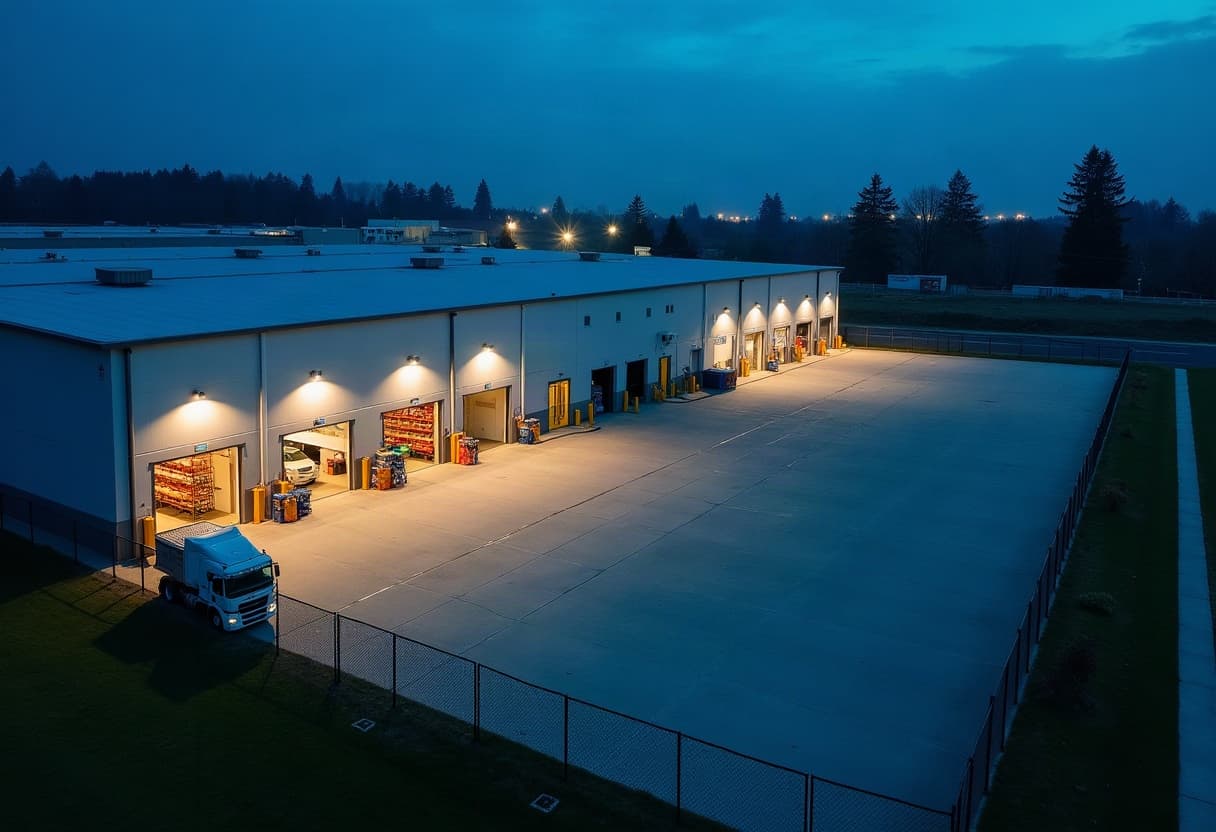
If you are searching for "secure warehousing," you are probably not storing cardboard and packing peanuts. You have inventory with real replacement value — consumer electronics, branded apparel, supplements, or regulated goods — and a standard warehouse with an open roll-up door and a forklift driver is not an acceptable risk. Secure warehousing is a distinct service tier that protects high-value inventory through physical, operational, and accountability controls that a general storage facility does not provide.
This guide explains what secure warehousing actually means, who needs it, how it differs from standard storage, and how to choose a secure warehousing provider in the Kent Valley and Seattle metro.
What "secure warehousing" actually means
Secure warehousing is not a marketing label. It is a combination of three layers of control that, together, make inventory loss and tampering rare and detectable rather than routine and invisible.
Physical security
The first layer is the facility itself. A secure warehouse has:
- Fenced and monitored perimeter — the yard is fenced, lit, and surveilled 24/7, not just during business hours.
- Access control — entry requires credentials (badge, PIN, or biometric), and every entry is logged. Visitors and vendors are escorted.
- Surveillance coverage — cameras cover dock doors, aisles, and caged or vaulted storage zones, with footage retained long enough to support an investigation.
- Fire and environmental protection — sprinkler systems, climate control where needed, and fire alarms tied to a monitored response.
A warehouse without these basics is general storage, regardless of what its website says.
Operational security
Physical controls are only as good as the people and processes behind them. Secure warehousing requires:
- Background-checked staff — the people handling your inventory have been screened, not just hired off a dispatch board.
- Restricted handling zones — high-value pallets are stored in caged, locked, or separately monitored areas, not mixed into general racking where any worker can reach them.
- Two-person rules for high-value moves — sensitive inventory is never moved by a single unsupervised worker.
Inventory accountability
The third layer — and the one most general warehouses lack — is the ability to prove where your inventory is and who touched it. A secure warehouse runs a computerized warehouse management system (WMS) that records:
- Receiving (who signed for the inbound, when, condition)
- Putaway location (exact rack, bin, or cage)
- Every move and pick (who, when, to where)
- Cycle counts and full physical inventories on a schedule
- Outbound shipment (who loaded it, what truck, when)
This chain-of-custody record is what makes secure warehousing insurable and audit-ready. If a pallet goes missing, you can trace it to the last person who handled it. A standard warehouse that relies on paper tallies cannot do this — and that gap is where shrinkage hides.
Who needs secure warehousing
Secure warehousing is not for everyone. If you are storing low-value, bulky, non-theft-target goods, a standard warehouse rental or business storage arrangement is more cost-effective. Secure warehousing is the right call when one or more of these is true:
- High per-pallet value — if a single pallet's contents are worth more than a few thousand dollars (electronics, branded goods, supplements), the security premium is cheaper than one theft event.
- Insurance or customer requirements — your insurance carrier or a major retail customer contract mandates a facility with documented security controls.
- Regulated products — pharmaceuticals, CBD-adjacent goods, defense components, or any product subject to chain-of-custody regulations.
- Theft-target categories — consumer electronics, designer apparel, alcohol, and other goods that are actively targeted by organized retail theft rings.
- You cannot afford a stockout event — if a theft or loss would break your fulfillment commitments to a major customer, the cost of secure storage is small compared to the cost of losing that account.
For lower-value or bulk goods, storage and distribution services without the full security tier are the better economic choice.
How secure warehousing pricing works
Secure warehousing costs more than standard storage because the controls cost money to install and operate. In the Kent Valley and Seattle metro, expect:
- Secure pallet storage — $20 to $35 per pallet per month (vs. $15–$25 for standard). The premium covers caged or monitored storage and restricted handling.
- Dedicated secure space — $0.80 to $1.60 per square foot monthly for a caged or vaulted dedicated area, compared to $0.60–$1.20 for standard dedicated space.
- Handling with chain-of-custody — receiving, putaway, and picking carry a small per-pallet premium to cover the documentation and two-person handling for high-value moves.
The right way to evaluate the cost is against the alternative. A single pallet of consumer electronics can be worth $5,000 to $20,000. The annual security premium on that pallet is roughly $60 to $180. The math is obvious — secure storage is insurance that also happens to store your goods.
How to choose a secure warehousing provider in the Kent Valley
Not every warehouse that advertises "secure storage" actually meets the standard. When evaluating a provider in the Kent Valley, Seattle, or the broader Pacific Northwest, look for:
Documented security controls
Ask for a written description of their physical security, access control, and surveillance. If they cannot produce it, they do not have a security program — they have a warehouse with a camera. A facility in the Kent Valley logistics corridor with port proximity is only valuable if the security layer is real.
WMS with chain-of-custody
Confirm they run a computerized WMS with EDI capability and can produce an audit trail for any pallet on demand. Ask to see a sample inventory report. A warehouse that cannot show you exactly where your goods are and who moved them is not a secure warehouse — it is storage with hope.
Insurance and bonding
Verify their insurance covers inventory in their care and ask about their history of loss claims. A secure warehouse should carry adequate cargo and warehouseman's legal liability coverage and be able to name you as an additional insured.
Restricted handling for high-value zones
Tour the facility (or request photos) and confirm that high-value storage is physically separated — caged, vaulted, or in a separately monitored zone — not sitting in general racking next to anyone's pallets.
Port access for secure drayage
If you import, secure warehousing is only part of the chain. Your ocean container has to move from the Port of Seattle or Tacoma to the warehouse without an unmonitored handoff. A provider with its own drayage fleet keeps the chain of custody intact from port to shelf. Learn how this works in the transloading and cross-dock guide.
Secure warehousing in the Kent Valley
The Kent Valley is the dominant warehousing corridor in the Pacific Northwest because it sits between the Ports of Seattle and Tacoma with direct highway access. That same concentration means Kent warehouses handle high-value import traffic daily, and the security standards in the valley are generally higher than in secondary markets.
All Season Warehouse provides secure warehousing from a 200,000 sq ft Kent facility with computerized inventory management systems, restricted-access storage zones, and full chain-of-custody documentation for high-value imports. If your inventory requires more than a standard open warehouse can offer, call 253-893-8864 or visit allseasonwarehouse.com to discuss secure storage for your goods.
Frequently asked questions
What is secure warehousing?+
Secure warehousing is storage that goes beyond a standard warehouse to protect high-value or sensitive inventory from theft, damage, tampering, and unauthorized access. It combines physical security (fenced yards, access control, surveillance), operational security (background-checked staff, audit trails, restricted zones), and inventory accountability (WMS tracking, cycle counting, chain-of-custody records). A truly secure warehouse can tell you who touched a pallet, when, and where it is at any moment.
Who needs secure warehousing?+
Secure warehousing is essential for importers storing high-value consumer electronics, pharmaceutical or supplement companies needing chain-of-custody, firearms or defense contractors with regulatory requirements, luxury goods importers, cannabis-adjacent products, and any business whose insurance carrier requires a certified secure facility. If the replacement cost of a single pallet exceeds a few thousand dollars, or if your customer contracts mandate secure storage, a standard warehouse is not enough.
How much does secure warehousing cost in the Kent Valley?+
Secure warehousing in the Kent Valley typically runs 20 to 40 percent above standard pallet storage — so roughly $20 to $35 per pallet per month for secure shared space, and $0.80 to $1.60 per square foot for dedicated secure caged or vaulted space. The premium covers surveillance, access control, and the operational overhead of restricted handling. For most high-value importers, the security premium is a fraction of what a single theft event would cost.
Does All Season Warehouse offer secure warehousing?+
Yes. All Season Warehouse operates a 200,000 sq ft facility at 22408 76th Ave S, Suite 200, Kent, WA 98032 with computerized inventory management systems, restricted-access storage zones, and surveillance. We store high-value imports for Pacific Northwest distributors and provide full chain-of-custody documentation. Contact us at 253-893-8864 to discuss secure storage for your inventory.