
Trucking Warehouse Services in Kent, WA
What a trucking warehouse does, how trucking companies use warehouse space for staging and cross-docking, and what to look for in a Kent Valley facility with dock access and drayage reach.
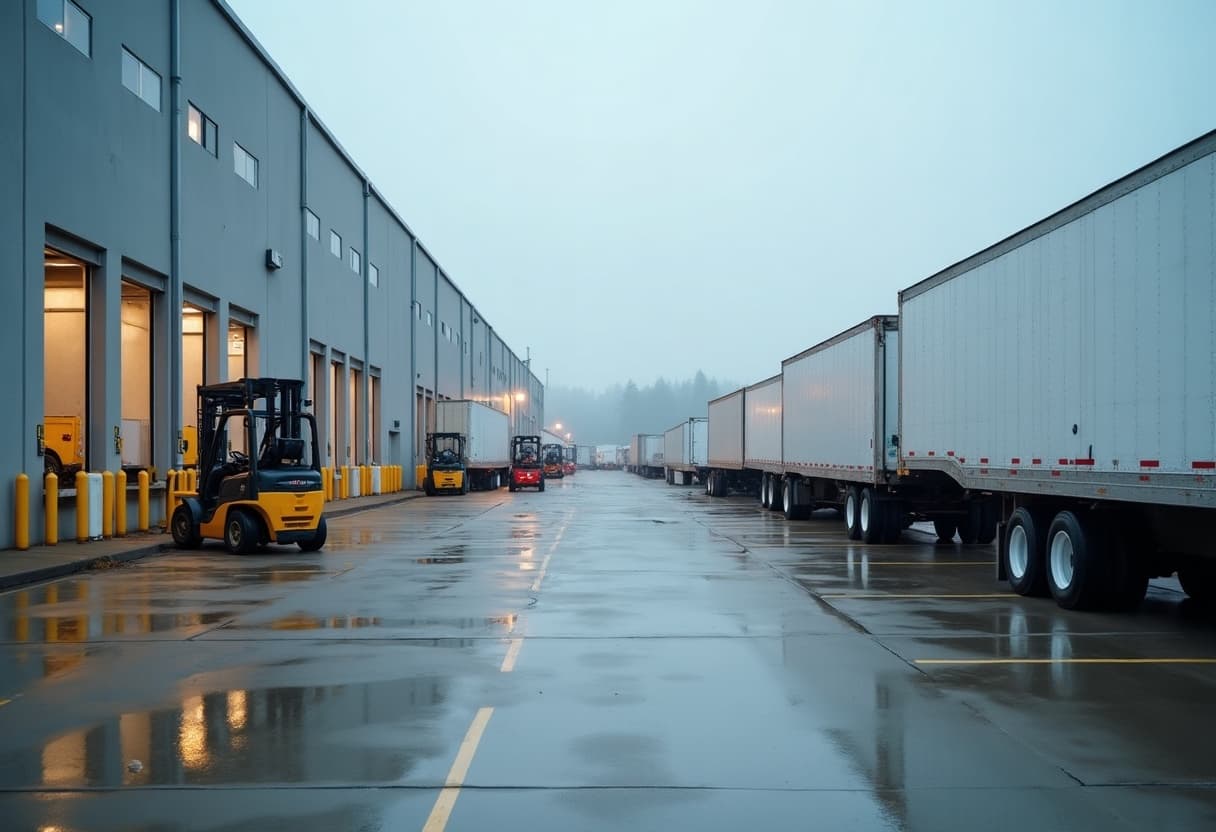
Trucking companies run on tight schedules. A load that sits in the wrong place for six hours costs money in driver time, fuel, and missed delivery windows. That is where a trucking warehouse comes in — a facility built to receive trailers, move freight fast, and get trucks back on the road. In the Kent Valley, the combination of port proximity, highway access, and warehouse capacity makes this one of the most efficient freight staging regions on the West Coast. This guide covers what a trucking warehouse does, how carriers use the space, and what to look for when choosing a facility in the Kent and Sumner area.
What a Trucking Warehouse Does
A trucking warehouse serves a different purpose than a standard storage building. It is built around truck access — dock-high doors, trailer staging areas, and enough dock capacity to turn multiple trailers per hour. The core services a trucking warehouse provides are:
Trailer receiving and unloading. Inbound trailers arrive at the dock, get unloaded, and the freight is scanned into the warehouse management system. The trailer is released back to the carrier or turned around for the next load. This is the baseline function, and the speed at which it happens determines how many loads a trucking company can move through the facility in a day.
Cross-docking. Freight is unloaded from an inbound trailer and directly loaded onto an outbound trailer with little or no storage time in between. Cross-docking lets trucking companies consolidate loads from multiple suppliers into single outbound shipments. A trucking warehouse with cross-docking capability can process 20 to 40 trailers per day through a single dock row if the freight is palletized and the routing plan is set up in advance. Our transloading and cross-dock service handles exactly this workflow.
Staging. Not every load goes straight from one truck to another. Sometimes a trailer arrives a day early, or the outbound truck is delayed. A trucking warehouse with staging space holds freight for a few hours or days without charging you for long-term storage. At our 200,000-square-foot facility on 76th Avenue South in Kent, we stage pallets on the floor or in racking depending on how quickly they need to move.
Transloading. This is where the trucking and warehousing worlds overlap most. An ocean container arrives at the Port of Seattle or Tacoma, gets drayed to the warehouse, and is unloaded. The goods are then reloaded onto domestic 53-foot trailers for regional delivery. Transloading lets a trucking company use domestic equipment for the inland leg instead of paying container per-diem charges while the marine box sits at a customer dock. All Season Warehouse runs transloading with a 55-truck fleet, so the drayage and the warehouse handling happen under one roof.
How Trucking Companies Choose a Warehouse
When a carrier or a shipper evaluates a trucking warehouse in the Kent Valley, five factors drive the decision.
Dock Access and Capacity
A trucking warehouse needs dock-high doors that fit standard 53-foot trailers. The number of doors matters — a facility with 4 doors creates a bottleneck that caps throughput, while a facility with 10 to 20 doors can handle simultaneous receiving and loading. Check whether the docks have load-levelers for damaged pallets and whether the yard has room for trailers to back in without blocking other trucks.
Highway and Port Proximity
Every mile between the port and the warehouse costs money in drayage. The Kent Valley sits between the Port of Seattle (18 miles north) and the Port of Tacoma (12 miles south), with I-5 and SR-167 running through it. A warehouse in Kent keeps drayage under 30 minutes each way. A warehouse in South Seattle or Fife adds time and cost. Our warehousing and distribution service is built around this location advantage.
Transloading Capability
Not every warehouse can move freight between ocean containers and domestic trailers. Transloading requires the right equipment — pallet jacks, forklifts rated for the cargo weight, and dock plates that bridge the gap between container floor and dock height. If a trucking company is importing through the ports, the warehouse needs to handle both container and trailer receiving on the same dock.
Inventory Tracking
A trucking warehouse that cannot tell you where a pallet is at any given moment is not a partner — it is a storage bill. Look for a facility that scans every pallet in and out and provides real-time inventory reports. This matters for DOT compliance, customs documentation, and customer order fulfillment.
Cargo Class Experience
Dry freight, frozen goods, food-grade products, and industrial materials all require different handling. A warehouse that stores food-grade products needs to separate them from industrial freight and follow food safety protocols. Ask what cargo classes the facility is set up to handle. All Season Warehouse processes dry, liquid, frozen, chilled, bulk, agricultural, industrial, and high-value goods across nine cargo classes.
The Kent Valley Advantage for Trucking Operations
The Kent Valley is not just another industrial area. It is the primary warehousing and distribution corridor between the two largest ports in the Pacific Northwest. The Kent Valley logistics hub developed because of three factors that directly benefit trucking companies.
First, the real estate is zoned for heavy industrial use with warehouse facilities averaging 50,000 to 250,000 square feet. Second, the highway network connects to every major regional destination — I-5 north to Seattle and south to Tacoma and Portland, SR-167 east to Auburn and Sumner, and I-405 to the Eastside. Third, the drayage distance from both ports is short enough that a driver can make two to three container round trips per shift.
For a trucking company running drayage out of the ports, this means lower per-container costs and faster turn times. For a carrier running regional distribution, the Kent Valley location puts Seattle, Tacoma, Bellevue, and Renton all within a 45-minute drive. Warehouse logistics in the Kent Valley work because the geography works — and the infrastructure was built to support it.
What a Trucking Warehouse Costs
Pricing varies by cargo type, volume, and the services you need. Most Kent Valley trucking warehouses use a combination of billing methods:
- Storage is billed monthly per pallet ($12 to $18 per pallet per month is common in the Kent market) or per square foot for floor-staged freight.
- Receiving is billed per pallet or per container, typically $8 to $15 per pallet for unloading and scanning.
- Loading is billed per pallet or per trailer, usually $10 to $20 per pallet for pulling, staging, and loading.
- Transloading is billed per container, ranging from $250 to $450 depending on pallet count and whether the freight needs sorting.
- Cross-docking is billed per pallet or per trailer handled, typically $15 to $30 per pallet.
The key to controlling costs is accuracy in your shipment details. When you request a quote, provide the container or trailer type, pallet count, cargo class, and timeline. Vague quotes lead to change orders. All Season Warehouse turns quotes around same-day and bills based on actual handling, not estimates padded for uncertainty.
Getting Started
If you are a trucking company looking for warehouse space in the Kent Valley, or a shipper that needs drayage and storage under one roof, the process is straightforward. Send your shipment details — container or trailer type, pallet count, cargo class, and delivery timeline — and we will quote same-day. Our facility at 22408 76th Ave S in Kent has 200,000 square feet, dock-high doors for 53-foot trailers, transloading capability, and a 55-truck fleet for drayage from both ports.
If your delivery point does not have a loading dock, we can also coordinate liftgate service so pallets come off the trailer at ground level. Contact All Season Warehouse or call (253) 246-2125 to get a quote. We handle transloading, cross-docking, storage, and drayage in one location, so your freight moves from port to warehouse to delivery without changing hands.
Frequently asked questions
What is a trucking warehouse?+
A trucking warehouse is a storage and distribution facility designed to work with trucking operations — offering loading docks, trailer staging areas, cross-docking, and transloading services. Unlike a standard storage building, a trucking warehouse is set up to receive trailers, unload freight fast, and reload it onto outbound trucks with minimal dwell time. In the Kent Valley, these facilities sit minutes from I-5 and SR-167 with direct drayage access to the Ports of Seattle and Tacoma.
How do trucking companies use warehouse space?+
Trucking companies use warehouse space for three main purposes: staging inbound loads before final delivery, cross-docking freight between trailers to consolidate routes, and temporary storage when receiving schedules do not match outbound schedules. A trucking warehouse with transloading capability lets carriers move freight between ocean containers and domestic 53-foot trailers, returning marine equipment quickly to avoid per-diem charges.
What should I look for in a trucking warehouse in Kent, WA?+
Look for dock-high doors that accommodate 53-foot trailers, adequate trailer parking for staging, transloading and cross-docking capability, inventory tracking systems, and proximity to both ports and major highways. The Kent Valley location between the Port of Seattle and Port of Tacoma with I-5 and SR-167 access keeps drayage costs low and regional delivery routes short.
How much does trucking warehouse space cost in the Kent Valley?+
Most Kent Valley warehouses bill monthly per pallet for racked storage or per square foot for floor-staged freight, with separate handling charges for receiving, loading, and transloading. Cross-docking is typically billed per pallet or per trailer handled. Pricing depends on cargo type, volume, and whether you need transloading or just storage. All Season Warehouse quotes same-day based on shipment details and pallet count.