
Container Drayage in Kent, WA
Container drayage from the warehouse side: how a Kent Valley 3PL pulls import boxes from the Port of Seattle and Tacoma, receives, devans, and distributes them.
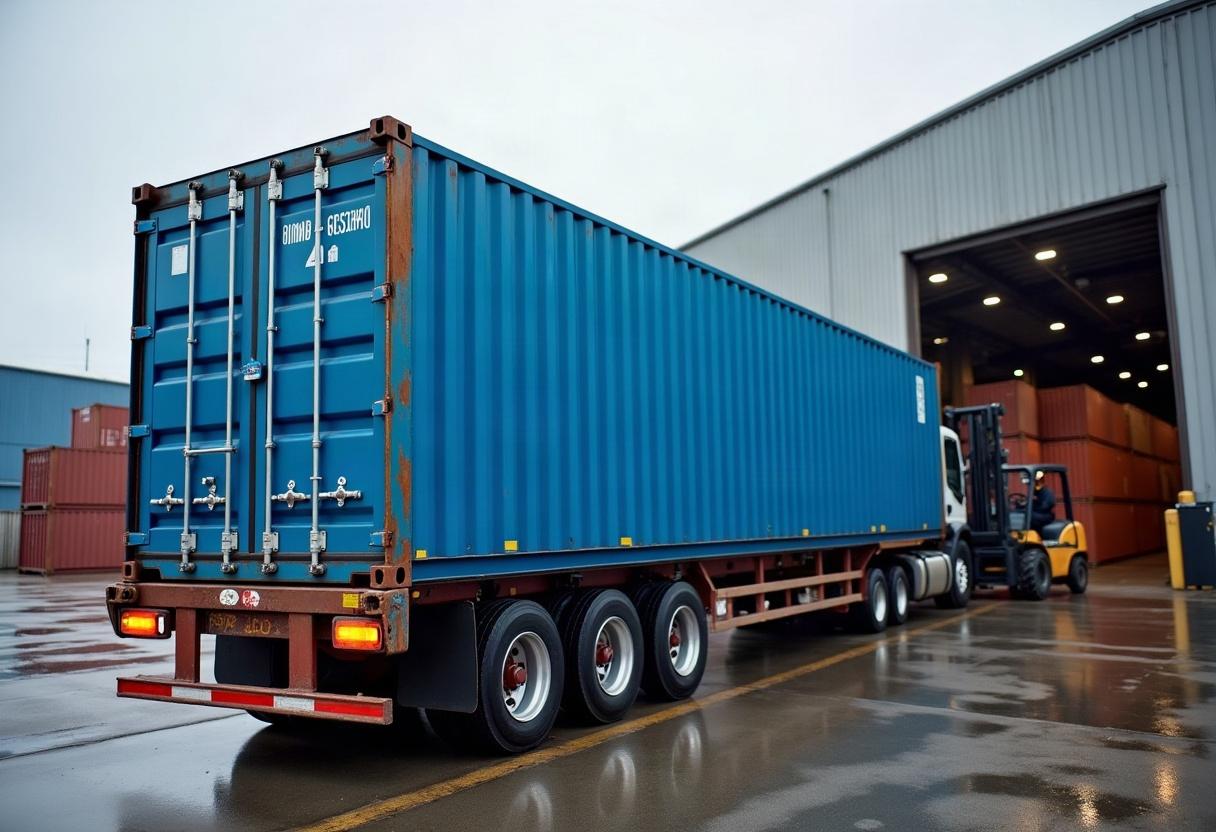
An import container does not just appear at your warehouse door. Between the moment the steamship line releases the box at the Port of Seattle or Port of Tacoma terminal and the moment your freight is on a shelf in the Kent Valley, there is a specific move that has to happen: a truck has to pick the container up at the terminal, put it on a chassis, drive it 15 miles down I-5 or SR-167, and deliver it to a dock. That move is container drayage. For an importer, it is the first mile of every ocean shipment that touches a warehouse.
This guide takes the drayage question from the warehouse side. The point is not what a drayage trucker does — it is what happens when the warehouse that stores and distributes your freight also controls the drayage move that brings the container to its own dock.
What Container Drayage Actually Is
Container drayage is the short-distance truck move that transfers a shipping container between an intermodal terminal — a seaport, a rail ramp, or a container yard — and a nearby warehouse, distribution center, or consignee. It is the connective tissue between an ocean or rail move and the warehouse that handles the freight inside the box.
A typical inbound drayage move has four parts:
1. Terminal pickup. The drayage carrier dispatches a truck and chassis to the Port of Seattle or Port of Tacoma terminal, presents the release and delivery order, and pulls the loaded container off the stack.
2. The road move. The truck drives the container the short distance from the terminal to the receiving warehouse. In the Kent Valley that is a 30-to-45-minute run via I-5 or SR-167.
3. Dock receiving. The container is spotted at a dock-high door. The warehouse crew breaks the seal, devans the cargo, palletizes loose cartons, counts against the manifest, and puts the freight away in the warehouse management system.
4. Empty return. The chassis and empty container go back to the terminal or depot the same day. Same-day empty return is what keeps demurrage, chassis detention, and per-diem charges from compounding.
When the warehouse that receives the container is also the party booking the drayage, that whole loop is one handoff instead of three. For a fuller picture of where drayage sits in the inbound flow, our transloading services guide walks through what happens after the container lands at the dock.
The Warehouse-Side Angle: Why It Matters
Most drayage content is written from the trucking side — what a carrier does, what a chassis costs, how a terminal appointment works. That is correct, but it misses the part importers actually pay for. The reason you dray a container to a warehouse is not to move the box; it is to get the freight out of the box and into a form you can store, pick, and ship.
A warehouse-side drayage provider owns the loop end to end. It schedules the terminal pickup, receives the container at its own dock, devans or unloads the cargo, and stages it for storage or onward distribution. There is no gap between the carrier that drops the box and the warehouse that strips it — and that gap is where most container-related costs hide.
Consider what happens when drayage and warehousing are split:
- The drayage carrier drops the box and leaves. The chassis starts ticking. If the warehouse is not ready to devan immediately, detention and per-diem fees compound daily.
- The container sits on a shared dock. A warehouse that receives your container among its own operations cannot always free a door the hour the box arrives. The container waits, and the clock keeps running.
- The empty return is a separate transaction. Someone has to coordinate trucking the empty back to the terminal. That someone is usually you, paying a second move.
A warehouse-side drayage provider collapses all three. The container is picked up when a dock door is ready, devanned by the same crew that will store the freight, and the empty is returned the same day under the same dispatch. For a closer look at the devanning step itself, see our container unloading in Kent, WA guide.
How Drayage Connects to the Rest of the Warehouse
Container drayage is the front door of a 3PL warehouse operation, but it is never the only thing happening to the freight. Once the box is at the dock, the warehouse runs several services against it, and drayage is the move that lets all of them start:
Devanning and palletizing. Floor-loaded containers are hand-unloaded and palletized; pallet-loaded containers are forklifted out. The cargo is counted against the manifest and put away in the WMS. Our container unloading service covers this step in detail.
Transloading. The freight is unloaded from the ocean container and reloaded into a domestic 53-foot trailer for onward trucking. This avoids marine container per-diem charges and puts the freight on a trailer that can actually deliver to a consignee. See our transloading and cross-docking service page.
Container Freight Station deconsolidation. For less-than-container-load (LCL) shipments shared between consignees, the drayage move brings the box to a licensed CFS where the cargo is sorted by consignee. Our Container Freight Station services explain how that works.
Short-term storage and distribution. The freight is put away in racked storage and held for pickup or outbound distribution on the shipper's schedule.
The thread connecting all of these is the drayage move. No drayage, no container at the dock; no container at the dock, none of the services behind it start.
What Drives Container Drayage Cost
Drayage is priced as a short-distance move, but the line items that determine what you actually pay are terminal- and chassis-related:
- Terminal and chassis fees. The port and the chassis pool each charge access and use fees. These are pass-throughs, but they are real.
- Free time and detention. Containers and chassis come with free time. Go over it and demurrage (port-side) and detention (chassis-side) start compounding daily.
- Distance. Drayage is priced by the mile outside a defined port radius. The closer the warehouse, the lower the line-haul portion.
- Empty return. Returning the empty to the right depot is a separate move if it is not bundled into the inbound dispatch.
The single biggest lever on all four is location. A warehouse 15 miles from both ports — close enough for same-day delivery and empty return — keeps every one of those costs down. The Kent Valley sits almost exactly between the Port of Seattle and the Port of Tacoma. That is why the corridor concentrates so much Puget Sound warehousing, and it is the local advantage a Kent drayage-and-warehouse operator plays.
Choosing a Container Drayage Partner From the Warehouse Side
When you are evaluating a container drayage provider and you also need warehousing, the questions that separate a real warehouse-side operator from a trucker with a dispatch board are operational:
Does the same party own the drayage and the dock? If the carrier that pulls the container is not the warehouse that receives it, you have a handoff — and a handoff is where detention and per-diem begin. A warehouse-side provider dispatches the drayage against its own dock schedule.
Is the warehouse minutes from the terminals? A 30-to-45-minute drayage run keeps the line-haul cheap and makes same-day empty return realistic. A warehouse an hour or more out turns every move into a two-trip problem.
Can the warehouse devan what arrives? Picking the container up is the easy part. The warehouse has to break the seal, unload floor-loaded or pallet-loaded freight, palletize loose cartons, and count against the manifest — fast enough to free the chassis the same day.
Does the operation handle the steps after drayage? Transloading, CFS deconsolidation, short-term storage, and outbound distribution should all sit at the same facility. Otherwise you are back to moving the freight between sites, which is what drayage was supposed to prevent.
How All Season Warehouse Handles Container Drayage
All Season Warehouse operates a 200,000 sq ft facility at 22408 76th Ave S, Suite 200, Kent, WA 98032 — squarely in the Kent Valley distribution corridor, roughly 15 miles from both the Port of Seattle and the Port of Tacoma via I-5 and SR-167. Drayage is run through our sister carrier, All Season Transport LLC, so the truck and the dock are under one dispatch.
The flow is one loop. We book the terminal pickup, pull the container, run the 30-to-45-minute drayage to our own dock, devan the cargo, palletize loose freight, count against the manifest, and put the inventory away in the warehouse management system. The empty container and chassis go back to the terminal the same day, which is what keeps demurrage and per-diem off the invoice. From there the freight can be transloaded into a domestic trailer, held in short-term storage, staged for outbound distribution, or deconsolidated through our licensed Container Freight Station — all at the same facility.
If you are importing through the Puget Sound and want the drayage move and the warehouse receiving to be one handoff instead of two, contact All Season Warehouse or call (253) 893-8864 to discuss your container volume, terminal, and receiving schedule.
Frequently asked questions
What is container drayage?+
Container drayage is the short-distance truck move that picks up an import or export shipping container from a port or rail terminal and delivers it to a nearby warehouse, distribution center, or consignee. In a warehouse-side drayage flow the same 3PL that stores your freight books the chassis, pulls the box from the Port of Seattle or Tacoma terminal, and lands it at its own dock for receiving, devanning, and onward distribution.
How is warehouse-side drayage different from booking a drayage trucker?+
A drayage trucker moves the container and hands it off. A warehouse-side drayage provider owns the whole loop: it schedules the terminal pickup, manages the chassis and empty return, receives the container at its own dock, devans or unloads the cargo, palletizes loose freight, and puts it away in the warehouse management system. There is no handoff between a carrier and a separate warehouse, which is where detention and per-diem charges usually start.
How far is the Kent Valley from the Port of Seattle and Port of Tacoma?+
The Kent Valley sits roughly 15 miles from both the Port of Seattle and the Port of Tacoma, connected by the I-5 and SR-167 corridors. A drayage run from either terminal to a Kent Valley warehouse is typically a 30-to-45-minute drive, which keeps container drayage costs low and lets the empty container be returned the same day to avoid demurrage and per-diem exposure.
Does All Season Warehouse handle container drayage and warehousing together?+
Yes. All Season Warehouse operates a 200,000 sq ft facility at 22408 76th Ave S, Suite 200, Kent, WA 98032 and runs drayage through its sister carrier All Season Transport LLC. The same team books the port pickup, receives the container at the dock, devans and palletizes the freight, and stages it for storage or outbound distribution.