
Warehousing and Logistics Services: A Practical Buyer's Guide for Pacific Northwest Shippers
Comparing warehousing and logistics services in the Kent Valley and Seattle metro? Learn what a combined provider should cover, how pricing works, and how to choose a partner that stores your freight and moves it.
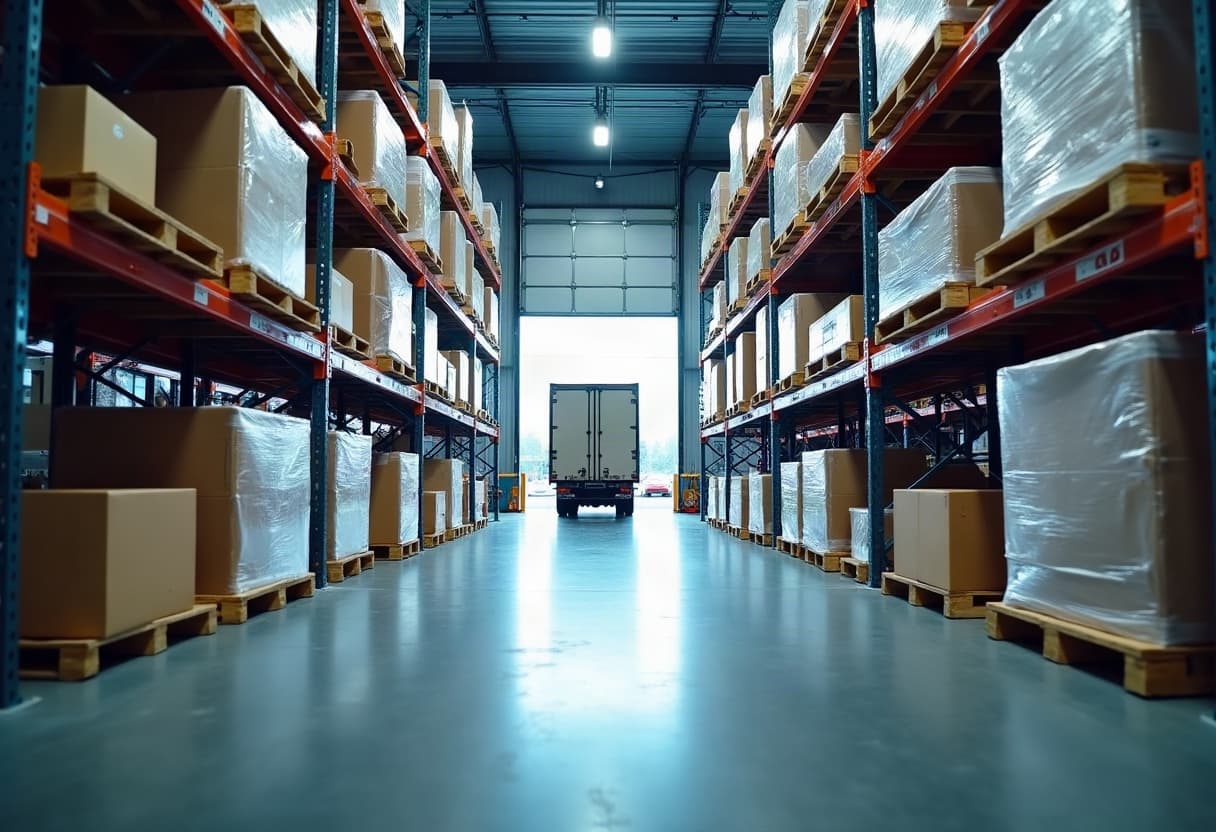
If you are evaluating "warehousing and logistics services" in the Pacific Northwest, you are most likely trying to solve two problems at once: where to store inventory and how to move it. Too many providers answer only one of those questions. A pure warehouse holds your pallets but leaves outbound freight, port drayage, and order fulfillment to you — which means contracting a separate carrier, scheduling your own pickups, and paying third-party markup on every truck. A pure carrier moves freight but has no place to stage, sort, or hold it between port arrival and final delivery.
This guide explains what a complete warehousing and logistics services package should cover, how pricing works in the Kent Valley and Seattle metro, and how to choose a partner that stores your freight and moves it under one roof. For a broader look at the storage half, see our warehousing and fulfillment guide; for the movement half, our storage and distribution buyer's guide walks through the distribution side in detail.
What "warehousing and logistics services" should actually cover
A provider selling combined warehousing and logistics services should be able to handle the full arc of your product from port arrival to final delivery. At minimum, that means:
- Inbound receiving and devanning: unloading ocean containers, breaking them down to pallets, and checking counts against your ASN or bill of lading.
- Storage: pallet positions, rack positions, or dedicated warehouse space, tracked in a warehouse management system (WMS) so you can see what you have on hand without a phone call.
- Value-added handling: transloading between ocean containers and domestic trailers, cross-docking for fast-turn freight, repackaging, labeling, and kitting.
- Outbound distribution: order picking, loading, and delivery to your customers, retail partners, or next-leg carriers via the warehouse's own truck fleet or a contracted carrier network.
- Drayage: port-to-warehouse container moves from the Port of Seattle or Port of Tacoma, typically the first mile of any import supply chain in the region.
If a provider lists storage but not drayage, or drayage but not storage, you are looking at half a service. The whole point of bundling is removing the handoff friction between the two.
How warehousing and logistics pricing works in the Kent Valley
Pricing in the Kent Valley breaks down into storage charges and logistics charges, and a bundled provider should quote both in the same proposal.
Storage:
- Pallet storage: $15 to $25 per pallet per month, depending on pallet size, weight, and whether product is food-grade or hazmat.
- Rack positions: priced per bay, with a premium for climate-controlled or high-security zones.
- Dedicated warehouse space: $0.60 to $1.20 per square foot monthly for a private sectioned area.
- Short-term or overflow storage: typically a higher per-pallet rate but no long-term contract — see our short-term warehouse storage guide for when this makes sense.
Logistics:
- Outbound pallet handling: $8 to $20 per pallet for picking and loading.
- Container devanning: $45 to $95 per ocean container, depending on contents and floor-loaded versus palletized.
- Transloading: $0.04 to $0.08 per pound or a flat per-pallet rate, whichever the provider quotes first.
- Drayage from the Port of Seattle or Port of Tacoma to a Kent warehouse: roughly $250 to $450 per container, depending on distance, chassis availability, and fuel surcharges.
- Full-truckload delivery within the Pacific Northwest: market spot or contract rates, often lower when bundled with storage because the warehouse can consolidate outbound loads.
When a single provider handles both sides, the savings come from eliminating duplicate coordination and accessing the warehouse's own carrier network at cost rather than a marked-up third-party rate.
Why the Kent Valley is the region's warehousing and logistics corridor
The Kent Valley runs between the Port of Seattle to the north and the Port of Tacoma to the south, with direct interstate and state-route access. A container discharged at either port can reach a Kent warehouse in under an hour by drayage truck. From Kent, I-5 connects north to Seattle and the Canadian border, I-405 loops around the east side of Lake Washington toward Bellevue and Redmond, SR-167 reaches the Green River Valley and Auburn, and I-90 crosses the state toward Spokane. This means product stored in Kent can reach Seattle, Tacoma, Bellevue, and the broader Pacific Northwest within a day's drive.
That port-and-highway proximity is why the Kent Valley holds the densest concentration of warehousing and logistics services in the Pacific Northwest. Choosing a warehouse outside that corridor — farther from the ports, off the main interstate spines — adds drayage miles, fuel cost, and transit time to every inbound container and every outbound load. For a deeper look at warehouse selection in the valley, see our Kent Valley logistics hub overview.
How to choose a warehousing and logistics services provider
When you compare providers in the Kent Valley and Seattle metro, ask these questions before signing:
- Do you handle drayage in-house or contract it out? An in-house drayage fleet means predictable port-to-warehouse transit and one bill. Contracted drayage means a third party, a separate invoice, and a longer chain of accountability if a container is delayed.
- What WMS do you run, and can I get real-time inventory visibility? A computerized WMS with EDI capability lets you see stock levels, receipts, and shipments without calling or emailing. A paper-based warehouse cannot.
- Is your truck fleet the same company or a sister carrier? A sister carrier under shared ownership gives you carrier accountability without a separate contract. All Season Warehouse stores freight and All Season Transport LLC (USDOT 2927850, MC 988260) moves it — same ownership, separate authority, one phone call.
- Can you scale storage up and down seasonally? If you import for a holiday peak or a product launch, you need overflow capacity without a 12-month lease. Ask about short-term or per-pallet overflow rates.
- What value-added services are included versus extra? Transloading, cross-docking, repackaging, labeling, and kitting are often quoted as add-ons. Get them on the same proposal so you can compare total cost, not just the storage line.
Common pitfalls when bundling warehousing and logistics
- "Storage only" warehouses quoting low pallet rates but no drayage. The headline rate looks cheap until you add a separate carrier, a separate devanning fee, and the coordination time of managing two vendors.
- Carriers offering "logistics" but no warehouse. A trucking company without storage cannot hold a container if your warehouse is full, cannot stage orders for outbound consolidation, and cannot rework a pallet that arrives damaged.
- No WMS or inventory visibility. A warehouse that cannot tell you what is on hand in real time forces you to keep a parallel spreadsheet, which drifts from the truth within a month.
- Long drayage distances. A cheaper warehouse 60 miles from the port costs more per container in drayage than a slightly more expensive warehouse 10 minutes from the port.
What All Season Warehouse provides
All Season Warehouse operates a 200,000 sq ft facility at 22408 76th Ave S, Suite 200, Kent, WA 98032 — minutes from both the Port of Seattle and Port of Tacoma. We provide pallet storage, rack positions, dedicated warehouse space, container devanning, transloading, cross-docking, and distribution through a 55-truck fleet operated by sister carrier All Season Transport LLC (USDOT 2927850, MC 988260). Inventory is tracked with a computerized WMS and EDI capability, so you get real-time visibility on top of storage and freight movement.
If you are comparing warehousing and logistics services in the Pacific Northwest, the question is not which warehouse is cheapest per pallet or which carrier is cheapest per mile — it is which provider can store your freight and move it under one roof, with one inventory system and one point of accountability. That is what we do. Contact us for a quote that covers both halves.
Frequently asked questions
What is the difference between warehousing and logistics services?+
Warehousing is the physical storage of inventory — receiving pallets, putting them away in rack or floor positions, and tracking what you have through a warehouse management system. Logistics is the coordinated movement of that inventory — outbound order picking, loading, drayage from the ports, transloading between containers and trucks, and final delivery. A combined warehousing and logistics services provider handles both halves so you do not have to contract a separate carrier, coordinate your own pickups, or pay marked-up third-party freight on top of your storage fees.
How much do warehousing and logistics services cost in the Kent Valley?+
Pallet storage in the Kent Valley typically runs $15 to $25 per pallet per month, dedicated warehouse space leases from $0.60 to $1.20 per square foot monthly, and rack positions are priced per bay. On the logistics side, outbound pallet handling ranges from $8 to $20 per pallet, container devanning from $45 to $95 per container, and full-truckload drayage from the Port of Seattle or Port of Tacoma to a Kent warehouse runs roughly $250 to $450 per container depending on distance and fuel surcharges. Bundling storage and distribution with one provider usually lowers total cost because you avoid duplicate coordination and access the warehouse's own carrier network.
Why choose a Kent Valley warehouse for warehousing and logistics services?+
The Kent Valley sits between the Port of Seattle and Port of Tacoma along I-5, so drayage trucks can move ocean containers from either port to a Kent warehouse in under an hour. The valley also has direct access to I-405, SR-167, and I-90, which means product stored in Kent can reach Seattle, Tacoma, Bellevue, and the broader Pacific Northwest within a day's drive. This port-and-highway proximity is why the Kent Valley is the dominant warehousing and logistics corridor in the region.
Does All Season Warehouse offer both warehousing and logistics services?+
Yes. All Season Warehouse operates a 200,000 sq ft facility at 22408 76th Ave S, Suite 200, Kent, WA 98032 — minutes from both ports. We provide pallet storage, rack positions, dedicated warehouse space, container devanning, transloading, cross-docking, and distribution through a 55-truck fleet operated by sister carrier All Season Transport LLC (USDOT 2927850, MC 988260). Inventory is tracked with a computerized WMS and EDI capability, so you get real-time visibility on top of storage and freight movement.